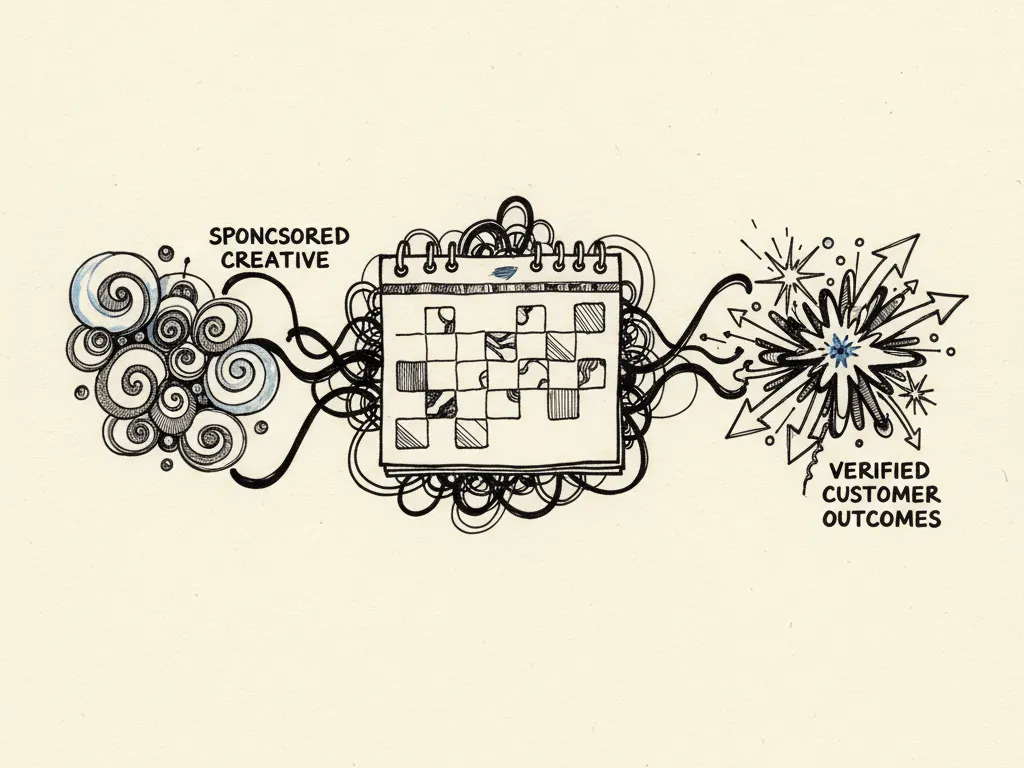
ChatGPT Ads is a real, officially documented advertising product, not a rumor or a future concept. OpenAI publishes setup guidance for an Ads Manager, and the company has also described newer, more experimental capabilities such as agent-style sponsored experiences being tested with a limited set of advertisers. That mix, a documented core product plus fast-moving experiments, means campaign design here requires more verification discipline than planning a Google or Meta campaign, where the interface has been stable for years.
This article treats four things as separate subjects, because conflating them produces bad strategy and bad claims: (1) buying a placement inside ChatGPT through Ads Manager, (2) using ChatGPT as a writing or analysis tool for ads that run elsewhere, (3) automation features inside Meta or Google that happen to use AI, and (4) organic visibility, meaning whether your brand gets mentioned in ChatGPT's own unpaid answers. This article is about the first subject: designing a paid campaign that runs inside ChatGPT.
Why conversation context changes campaign design
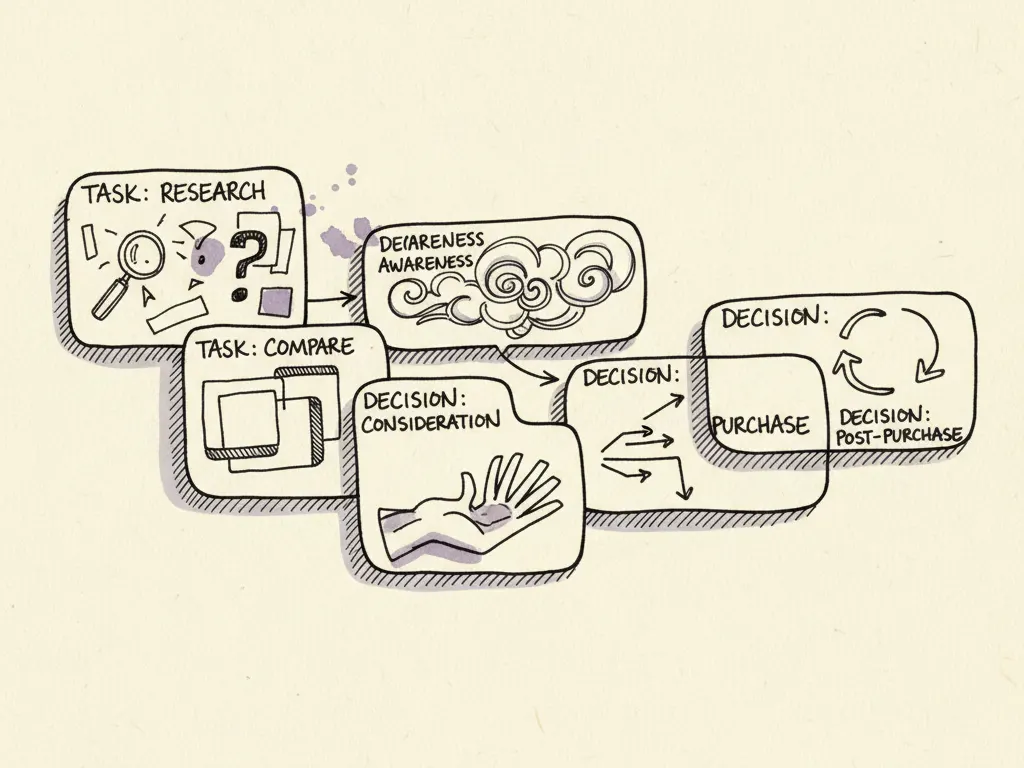
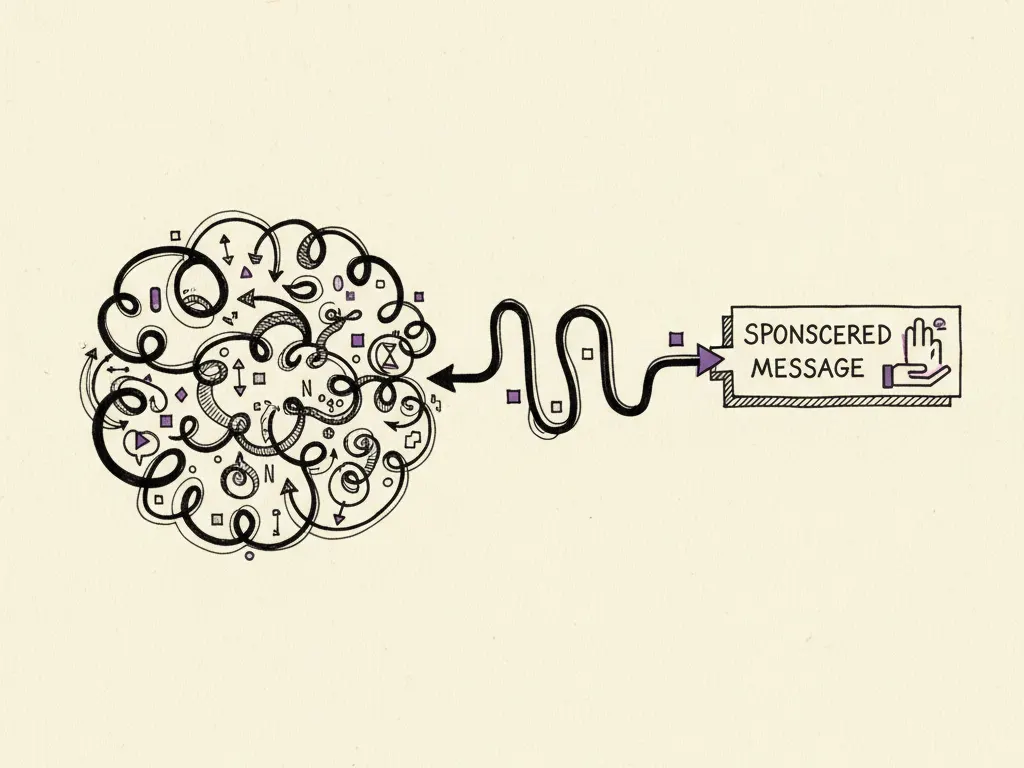
A search ad responds to a typed query. A social ad interrupts a feed. A ChatGPT ad, where supported, sits inside a conversation where the user has already stated a goal in their own words, sometimes across several turns. That context is the main strategic difference: the platform has more information about what the person is actually trying to do than a single search query typically reveals. Your campaign design job is to decide, for a defined set of user intents, what a relevant, honest sponsored message looks like, without assuming you can see or target the private content of someone's conversation beyond what the platform's documented matching actually supports.
This means the planning sequence is different from a traditional ads brief. Instead of starting with a demographic audience, start with a task: what is the person trying to figure out or accomplish right before they would plausibly see your message? A campaign built around 'people aged 25 to 34' is a weaker starting point here than a campaign built around 'people actively comparing accounting software for a small business.'
A five-part campaign specification
Whether or not every field below exists by name in the current Ads Manager, a complete hypothetical specification should cover these five areas before you build anything live.
- 1Verified capability check: confirm current objectives, formats, targeting, and eligibility in official docs
- 2Intent definition: the specific task or question the campaign responds to
- 3Offer and destination: what you promise, and the exact page or action the click leads to
- 4Creative concept: message variants matched to the intent, written for a conversational context
- 5Measurement and reporting plan: what you can verify now, and what remains a known gap
1. Verified capability check
Document, with a date, what you confirmed directly from OpenAI's advertiser documentation: account eligibility in your market, supported objectives (for example, driving clicks to a website, versus other formats the platform may support), creative formats, and any targeting dimensions. If something is described as a limited test, such as agent-style sponsored experiences for selected US advertisers, note that explicitly rather than planning around it as if it were generally available.
2. Intent definition
Write one sentence describing the task context your ad responds to, for example, 'a small business owner asking ChatGPT to compare payroll providers.' Avoid broad categories like 'business owners interested in software,' because that intent is too vague to write honest, specific creative against.
3. Offer and destination
Decide exactly what you are offering (a free trial, a demo booking, a specific product page) and where the click lands. The destination should answer the same question the user was already asking, not a generic homepage, because the conversational context raises the bar for relevance.
4. Creative concept
Draft two or three message variants that acknowledge the task context honestly, without pretending to know more about the person than the platform's documented targeting would support. A conversational ad should read like a useful, clearly labeled sponsored suggestion, not an attempt to blend into the assistant's own voice.
5. Measurement and reporting plan
List what you can verify today (clicks, and whatever conversion mechanism is officially documented) and what remains unverified or limited, such as granular audience reporting. This matters more here than on mature platforms because reporting on a newer ad surface is often thinner.
Targeting and exclusions: stay inside documented limits
Only plan targeting or exclusion logic that is explicitly supported in current official documentation for your account type and market. Do not assume you can target based on inferred sensitive characteristics (health conditions, financial distress, and similar categories), inferred private conversation content beyond documented matching, or arbitrary prompt text. If your intended use case depends on a targeting capability you cannot confirm exists, mark the specification as 'pending verification' rather than building around it.
A supported-controls checklist before you launch
- Confirmed account and market eligibility directly in Ads Manager documentation
- Confirmed current objectives and creative formats supported for your account
- Confirmed any targeting or exclusion options actually exist and apply to your market
- Written a one-sentence intent definition the campaign responds to
- Matched the destination page to the stated intent, not a generic homepage
- Identified exactly what conversion data you can verify, and what remains a known reporting gap
- Dated the verification so the spec can be rechecked before the next refresh
Common mistakes
- Assuming a feature exists because a competitor's agency mentioned it, instead of checking official documentation yourself.
- Treating a limited advertiser test (such as Sponsored Agents) as a generally available option.
- Writing creative for a broad demographic instead of a specific, well-defined task intent.
- Sending clicks to a generic homepage instead of a page that answers the exact question the intent implies.
- Publishing specific CPMs, minimum spends, or targeting fields without having verified them live in the current interface.
- Confusing a paid placement inside ChatGPT with using ChatGPT to write ads that run on Google or Meta.
When this is not the right tactic
ChatGPT Ads is not the right starting point if your business has no confirmed account eligibility yet, if your market or objective is not currently supported, or if your offer depends on broad demographic targeting that this conversational surface may not support in the way a mature social platform does. It is also a weak fit for businesses that have not yet validated their message on more measurable channels, since reporting gaps here make it harder to isolate what is working. In those cases, build and prove your offer on a more established paid channel first, then treat this platform as an additional, carefully scoped test once your eligibility and objectives are confirmed.
Where this fits in your AI advertising plan
Campaign design is the mechanics layer. The intent research behind it, deciding which conversational tasks actually matter for your business, is covered separately, and the measurement plan for whatever you launch deserves its own dedicated process once creative and controls are confirmed. Treat this article as the specification you complete before either of those, not a replacement for them.