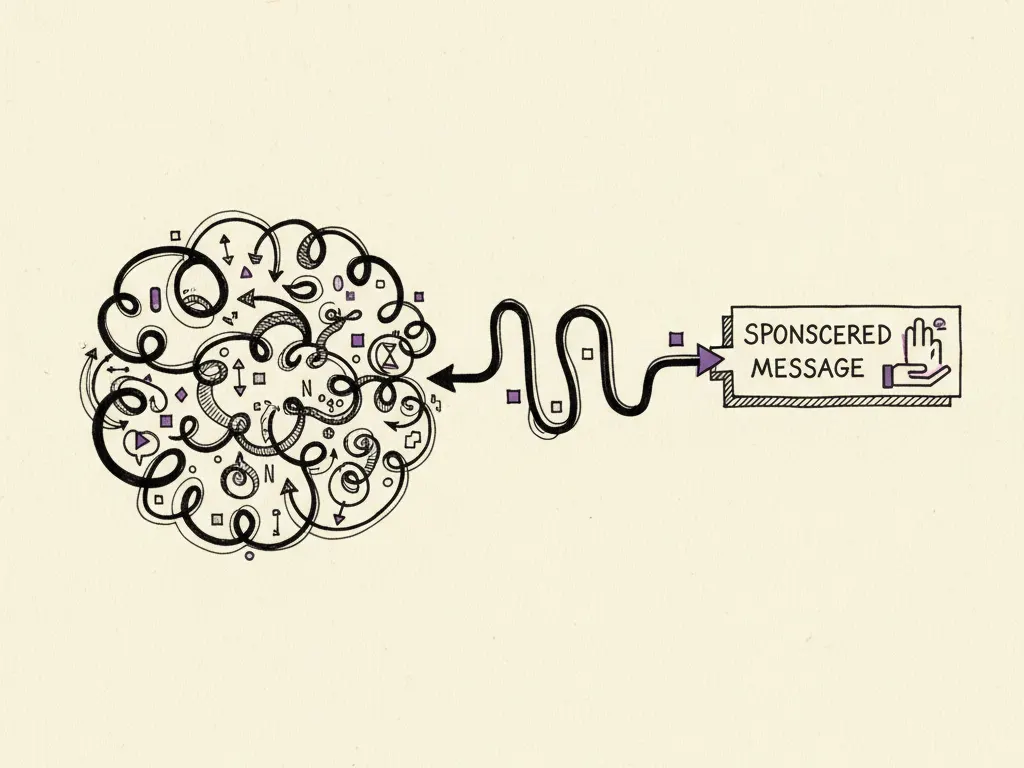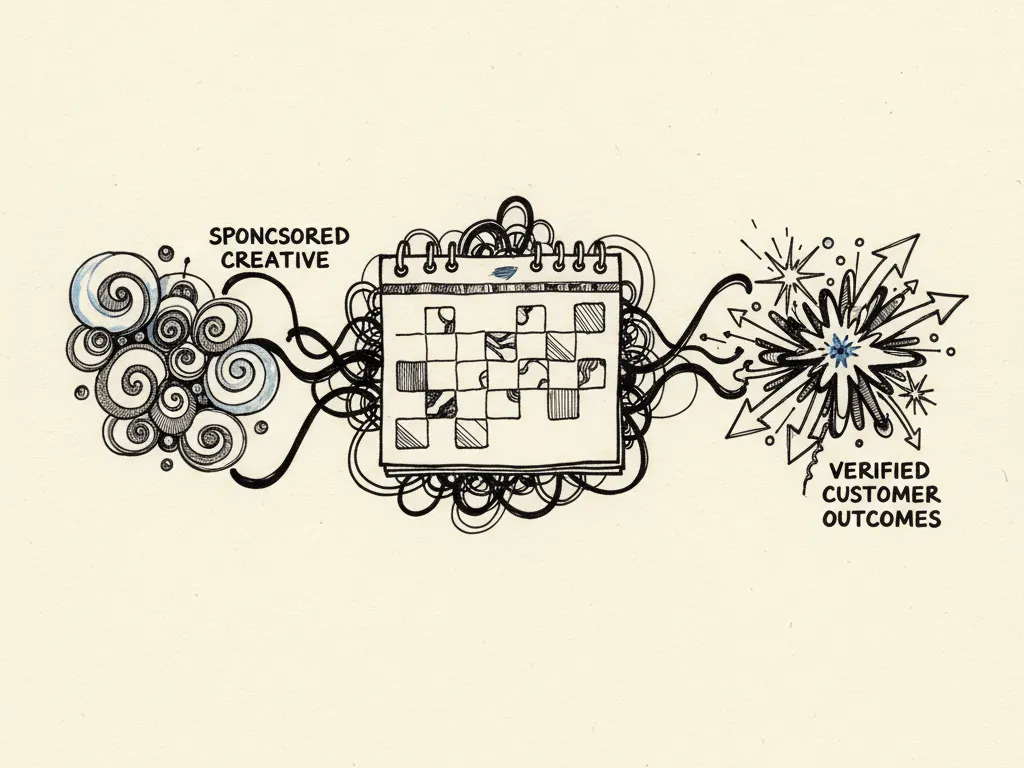
There is a persistent claim online that 'ChatGPT has no advertising platform.' That is out of date. OpenAI maintains official documentation for an Ads Manager product that supports advertising placements inside ChatGPT. This article explains what that product category covers conceptually, how it differs from simply using ChatGPT to help write ads for other platforms, and what you should verify yourself before relying on any specific detail.
Four things people conflate, kept separate
A lot of confusion about 'ChatGPT and ads' comes from mixing up four distinct concepts. Keeping them separate will save you from planning a campaign around the wrong product.
| Concept | What it means | Who controls it |
|---|---|---|
| ChatGPT Ads | Paid placements inside ChatGPT via Ads Manager | Advertiser, through OpenAI's documented setup |
| Using ChatGPT to write ads | Asking ChatGPT to draft or analyze ads run on another platform (e.g. Meta, Google) | You, using ChatGPT as a writing/research tool |
| Platform ad automation | Meta's or Google's own documented AI ad automation features | Advertiser, through that platform's tools |
| Organic AI search visibility | Appearing in ChatGPT's independent conversational answers | Not purchasable; influenced by content quality and discoverability |
This article is about the first row only: paid placement inside ChatGPT. The next lesson in this module compares the first two rows in more depth as a workflow decision.
What to verify before you plan anything
Because this is an evolving product, do not rely on secondhand summaries, including this one, for specific numbers or interface labels. Instead, work through this verification list against OpenAI's current official documentation each time you plan a campaign.
- Confirm whether your business and country are currently eligible for Ads Manager access
- Confirm the account prerequisites (business verification, billing setup, policy acceptance)
- Confirm the campaign objectives currently supported, rather than assuming parity with other platforms
- Confirm the supported creative formats and any content/policy restrictions
- Confirm how reporting and conversion measurement currently work, and what you can and cannot track
- Check whether any feature you plan to use is described as a limited pilot or test rather than general availability
- Record the date you verified each item, since these details can change between campaigns
Why 'last verified' dates matter here
OpenAI has, at various points, described both a general advertiser-facing Ads Manager and more experimental capabilities positioned as limited tests with selected advertisers. Treating a limited pilot as something any advertiser can access today is a common and avoidable mistake. If a feature is described anywhere as a test, beta, or selected-advertiser rollout, assume it is not generally available until official documentation says otherwise, and note the date you checked.
Distinguishing paid placement from independent answers
A paid placement inside ChatGPT is clearly distinct from ChatGPT's own independent conversational answers. Buying an ad does not buy influence over what ChatGPT says when a user asks an open question unrelated to that ad. Businesses that want to show up favorably in ChatGPT's independent answers need to focus on the organic AI search visibility factors covered elsewhere in this curriculum (structured, accurate, crawlable content), not on ad spend.
Building your setup checklist
The deliverable for this lesson is an eligibility and setup checklist, linked to OpenAI's current official documentation, that you re-check before every new campaign rather than relying on a single point-in-time read. Keep the checklist itself generic (what to check) rather than hard-coding specific answers that may go stale.
Common mistakes
- Repeating the outdated claim that ChatGPT has no advertising platform at all.
- Assuming a feature described as a limited pilot is available to every advertiser.
- Copying campaign objective or targeting terminology from Meta or Google and assuming it applies identically here.
- Treating a paid placement as a way to influence ChatGPT's independent answers to unrelated questions.
- Skipping a re-verification step before each new campaign, since eligibility and supported features can change.
When this is not the right tactic
If your business or country is not yet eligible for ChatGPT Ads, or if your primary goal is appearing in ChatGPT's independent answers rather than running paid placements, this is not the right lesson to act on yet. In the first case, focus budget on verified-available channels and revisit eligibility periodically. In the second case, the organic AI search visibility lessons in this curriculum are the relevant path, since no amount of ad spend substitutes for that.
Where to go next
Once you understand access and setup conceptually, the next lesson compares using ChatGPT as a creative and research assistant against buying placements through ChatGPT Ads, so you can choose the right workflow for your goal.