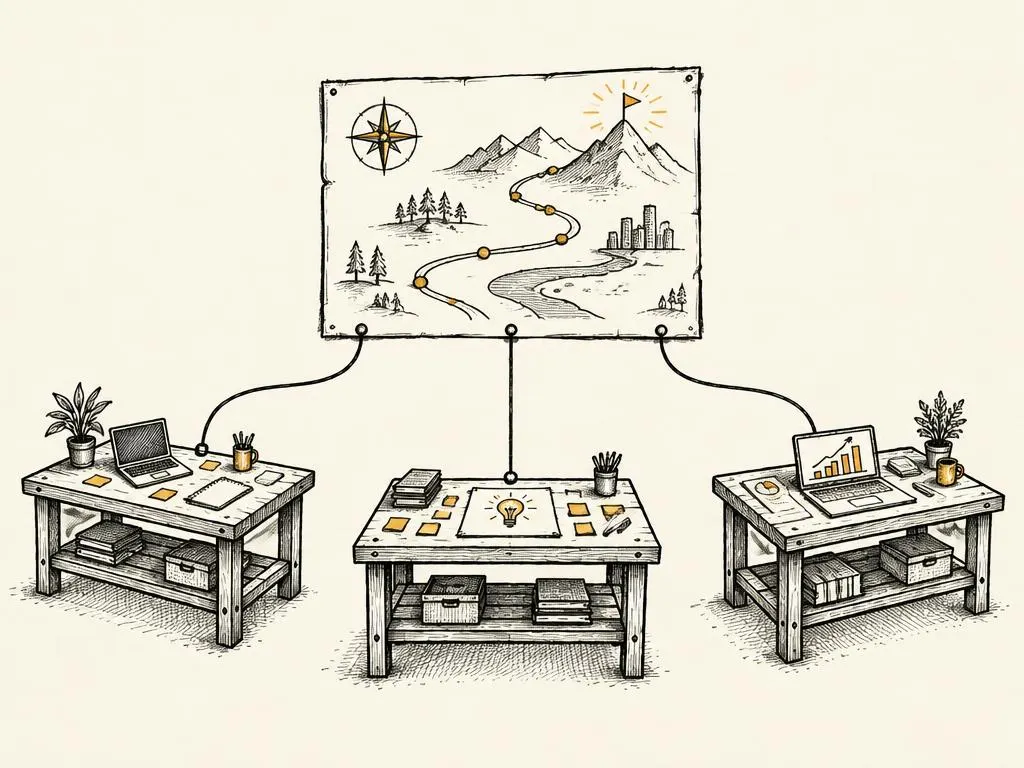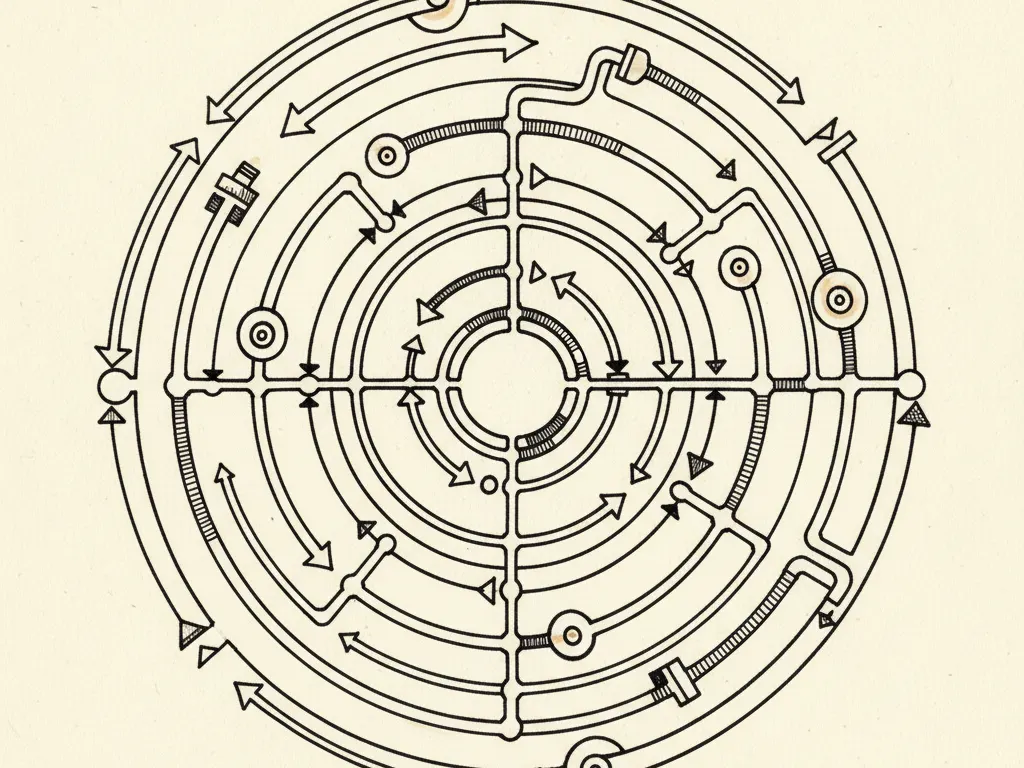
'AI-powered growth marketing' gets used loosely, sometimes to mean a chatbot that writes captions, sometimes to mean a fully automated pipeline. Neither extreme is useful. A growth marketing system is a connected set of stages that turns attention into customers and customers into repeat revenue. AI can speed up work inside each stage, but the system only works if the stages are linked by shared data and clear decisions, not by six separate tools that never talk to each other.
This article maps the six stages, shows where AI assistance genuinely helps, and is explicit about which decisions should stay with a person. The goal is to help you evaluate your own setup (or a vendor's pitch) against a real operating structure instead of a list of software names.
The six connected stages
Every growth system, AI-assisted or not, moves through the same six stages. What changes with AI is the speed and volume of drafts, summaries, and pattern detection available at each one.
Research
AI can summarize customer reviews, cluster support tickets by theme, draft competitor comparison tables from public pages, and generate a first-pass list of likely customer questions. It cannot tell you which problems matter most to your actual customers, interview a real client, or judge whether a competitor's positioning is a threat. A person should set the research questions and sanity-check the summaries against a handful of real conversations or data points.
Creative
This is where AI assistance is most visible: drafting ad copy variations, outlining a video script, rewriting a paragraph in a different tone, or generating ten headline options from one brief. A person still needs to choose the brand voice, reject anything off-brand or factually wrong, and approve claims before they go anywhere near a live campaign or public page.
Distribution
AI can suggest posting times, repurpose one asset into formats for different channels, and draft channel-specific captions. Distribution decisions that should stay with a person include which channels actually fit the audience, how much budget goes where, and whether a platform's current policies or placements match the campaign (see the section on verifying platform details below for any platform-specific tutorial).
Conversion
AI can draft landing page copy variants, write follow-up email sequences, and flag likely points of friction based on patterns in a checkout or form flow. A person should still own pricing, offer terms, legal copy (refunds, guarantees, terms of service), and any claim that could be considered a promise to a customer.
Retention
AI can segment a customer list by behavior and draft lifecycle email or message sequences for each segment. A person should decide what counts as a meaningful segment for the business, approve the cadence so customers are not over-messaged, and review tone for sensitive moments such as cancellations or complaints.
Measurement
AI can summarize a reporting dashboard in plain language, flag unusual swings, and draft a weekly summary. A person must decide what the numbers mean for the business, including whether a metric change reflects a real shift in demand or a tracking or seasonality artifact, and feed that judgment back into the next research cycle.
Tool use versus a coherent system
Using an AI writing tool for captions, a separate AI tool for ad copy, and a dashboard for reporting is tool use. It becomes a system only when the outputs of one stage become structured inputs to the next: research findings feed the creative brief, creative performance feeds the next round of research questions, and measurement data is shared across whoever owns distribution and conversion, not locked in one person's inbox.
| Trait | Scattered tool use | Connected growth system |
|---|---|---|
| Data handoff | Each tool's output stays siloed | Research, creative, and results data are shared across stages |
| Ownership | Whoever used the tool decides alone | Named owner and reviewer per stage |
| Review before publishing | Inconsistent or skipped | A defined quality check at each stage |
| Feedback loop | Results rarely reach the research stage | Measurement findings reshape the next research cycle |
Building your operating map
The deliverable for this lesson is an operating map: for each stage, list the task, the input it needs, the person who owns the decision, and the quality check before anything moves to the next stage. This does not need to be elaborate software; a shared spreadsheet or document is enough for a small team.
Your operating map template
- Research: task, data input, owner, and the check before findings are acted on
- Creative: task, brief input, owner, and the brand/fact check before anything is approved
- Distribution: task, approved asset input, owner, and the channel-fit check before publishing
- Conversion: task, offer input, owner, and the legal/pricing check before a page goes live
- Retention: task, segment input, owner, and the frequency/tone check before a sequence sends
- Measurement: task, data input, owner, and the sanity check before a conclusion is acted on
Common mistakes
- Buying several AI tools and assuming the combination is automatically a 'system' without connecting their data or handoffs.
- Letting AI-drafted creative or claims go live without a brand and fact check, especially for pricing, guarantees, or comparisons.
- Treating every stage as equally automatable, including judgment calls like budget allocation or legal copy that should stay with a person.
- Building measurement as a one-off report instead of a loop that reshapes the next research cycle.
- Skipping a quality check because the AI draft 'sounded right,' without verifying facts against the actual business.
When this is not the right tactic
A fully mapped six-stage system is overkill for a one-person business testing a single offer for the first time; in that case, a simple plan-create-measure loop (as described in the earlier foundations module) is enough. It is also not worth building if the business has no reliable measurement in place yet, since an AI-assisted system without honest measurement just produces faster guesses. Fix measurement first, then layer in AI assistance stage by stage.
Where to go next
Once you have an operating map, the next step is deciding which repetitive tasks inside it are safe to automate and which need a human review gate every time, covered in the lesson on automating marketing workflows without losing control.