These three terms are often used as if they compete, but they describe different things: a channel category (digital), a strategic approach (growth), and a measurement philosophy (performance). Digital marketing is the umbrella: anything done through online channels. Growth marketing and performance marketing are both approaches you can apply within digital marketing, and in practice they overlap heavily.
Digital marketing: the umbrella term
As covered in the previous article, digital marketing simply means marketing conducted through online channels: search, social, email, websites, and advertising platforms. It says nothing about strategy or philosophy, only about where the activity happens.
Growth marketing: experimentation across the whole lifecycle
Growth marketing is an approach that treats the entire customer lifecycle, acquisition, activation, retention, referral, and revenue, as fair territory for experimentation, not just the initial sale. A growth marketer might run a test on email onboarding sequences, a referral incentive, or a pricing page layout, alongside more traditional acquisition campaigns. The emphasis is on finding and scaling repeatable, measurable improvements wherever they occur in the customer journey, often through rapid, structured experiments.
Performance marketing: direct, trackable response
Performance marketing is an approach, not a channel, that prioritizes marketing activity where the cost and the result can be directly tracked and attributed, classically pay-per-click search ads, paid social ads, and affiliate marketing, where you pay based on a measurable action (a click, a lead, a sale). The defining feature is traceability: you can usually connect a specific pound or dollar of spend to a specific outcome, at least within the platform's own reporting.
| Approach | Primary scope | Typical goal | Typical timeline |
|---|---|---|---|
| Digital marketing | Any online channel | Varies by channel and goal | Ongoing umbrella term |
| Growth marketing | Full customer lifecycle | Find and scale repeatable growth levers | Continuous experimentation cycles |
| Performance marketing | Trackable, often paid, activity | Direct, attributable response | Campaign-based, often short cycles |
Acquisition versus lifecycle growth
A narrow acquisition focus asks only: how do we get new customers? A lifecycle growth focus also asks: how do we get new customers to stick around, buy again, and refer others? For many businesses, especially subscription or repeat-purchase ones, lifecycle improvements (reducing churn, increasing repeat purchase rate) can be as valuable as new acquisition, sometimes more so, because retaining an existing customer is typically far cheaper than acquiring a new one.
Performance measurement vs performance-based pricing
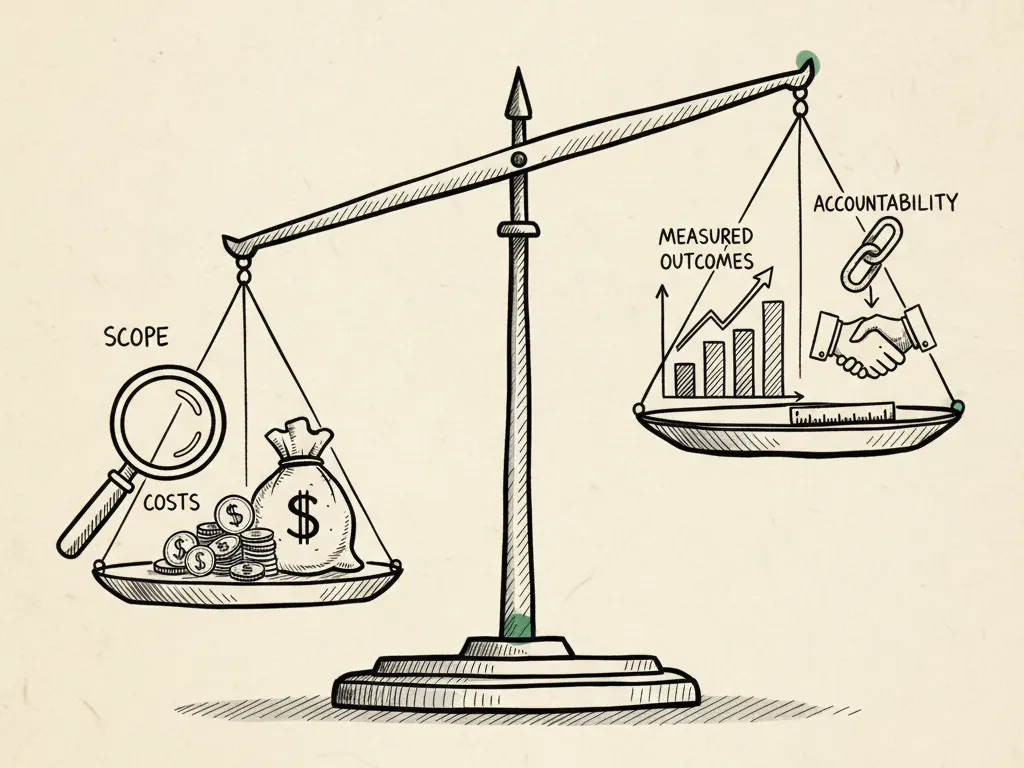
These two ideas are often confused. Performance measurement means tracking results against cost, for example knowing your cost per lead or return on ad spend. Performance-based pricing is a commercial arrangement where an agency or freelancer is paid partly or fully based on results (for example, a fee per qualified lead generated) rather than a flat retainer. You can measure performance rigorously while still paying an agency a standard retainer, and conversely a performance-based pricing deal still requires honest measurement to work fairly for both sides. Do not assume 'performance marketing' as a discipline automatically implies a specific pricing model.
Comparison table of responsibilities (deliverable)
| Role focus | Owns | Works closely with | Primary evidence |
|---|---|---|---|
| Performance marketer | Paid search, paid social, affiliate, trackable campaigns | Analytics, creative, landing pages | Cost per result, ROAS, conversion rate |
| Growth marketer | Lifecycle experiments: onboarding, retention, referral, pricing tests | Product, data, lifecycle email/CRM | Experiment results, retention curves, LTV |
| Digital marketing generalist (small business) | All of the above, at smaller scale | Often works solo or with one agency | Whatever metrics match the current goal |
Common mistakes
- Treating digital, growth, and performance marketing as mutually exclusive career tracks or strategies.
- Calling any paid-results agency deal 'performance marketing' when it actually refers to pricing, not strategy.
- Running growth experiments without a measurement plan, making it impossible to know what actually worked.
- Over-indexing on acquisition metrics while retention quietly erodes in the background.
- Assuming a 'growth hack' from another industry will transfer directly without testing it against your own audience.
When this distinction matters less
For a solo founder or very small team, debating which label applies to your work is rarely a good use of time; focus on the actual goal, acquiring customers, retaining them, or both, and borrow whichever tools from growth or performance marketing actually help. The terminology mainly matters when hiring (so job titles and responsibilities are clear) or when briefing an agency on scope, which is the decision this article's related article on choosing the right marketing model for your business will walk through.