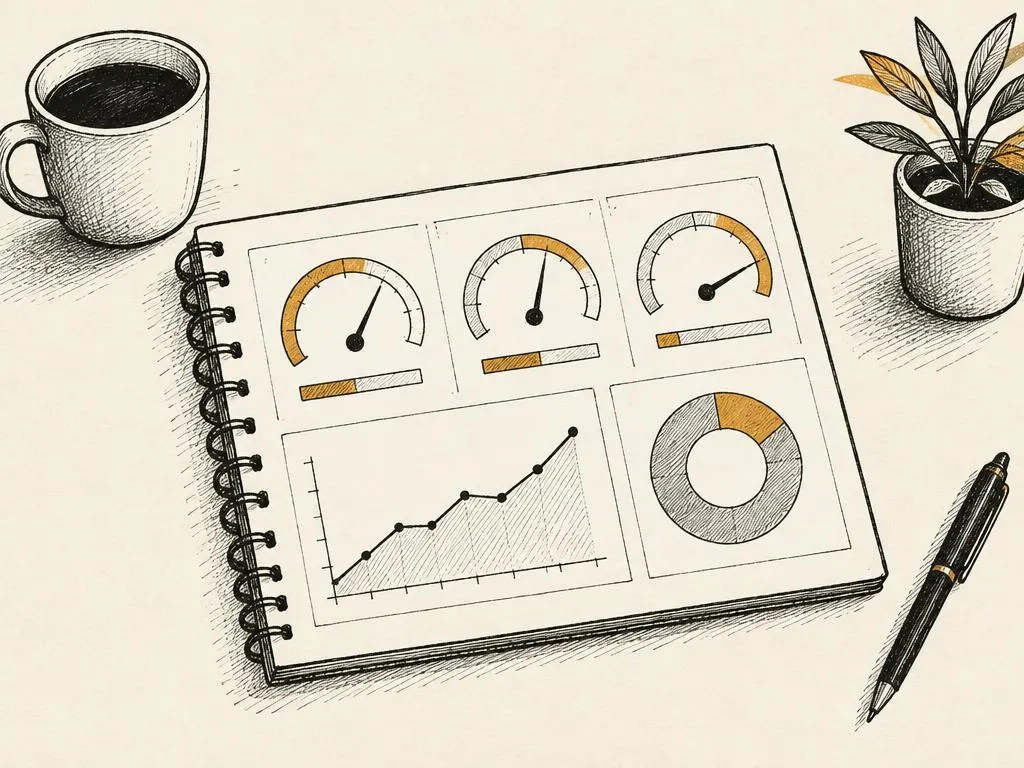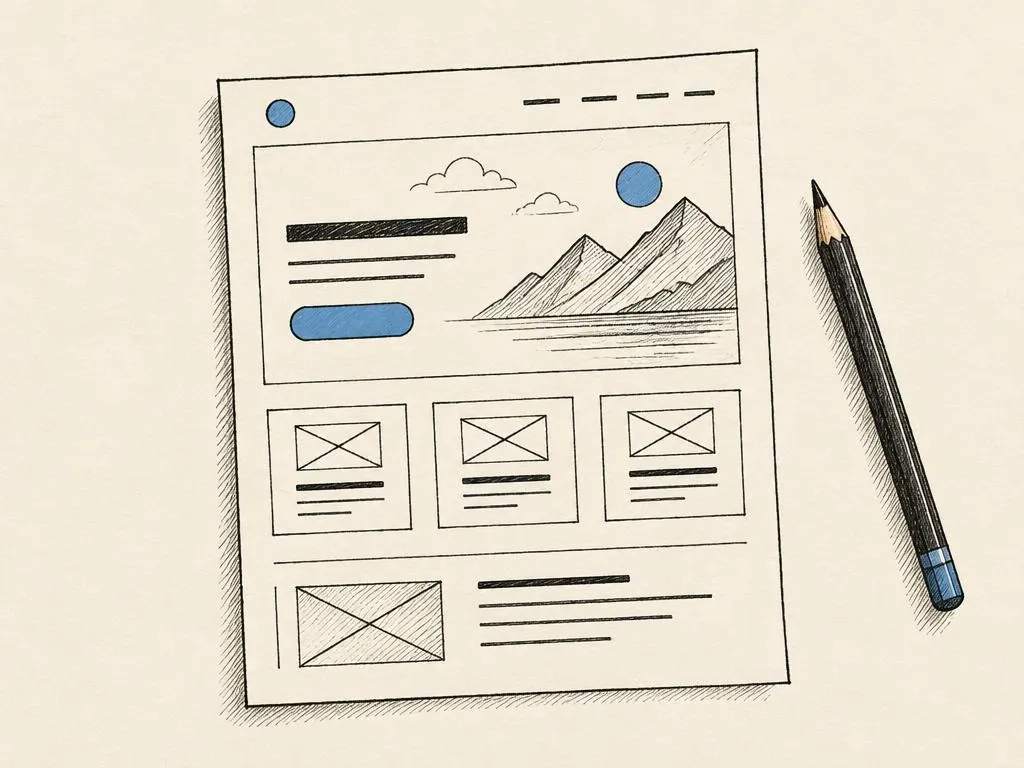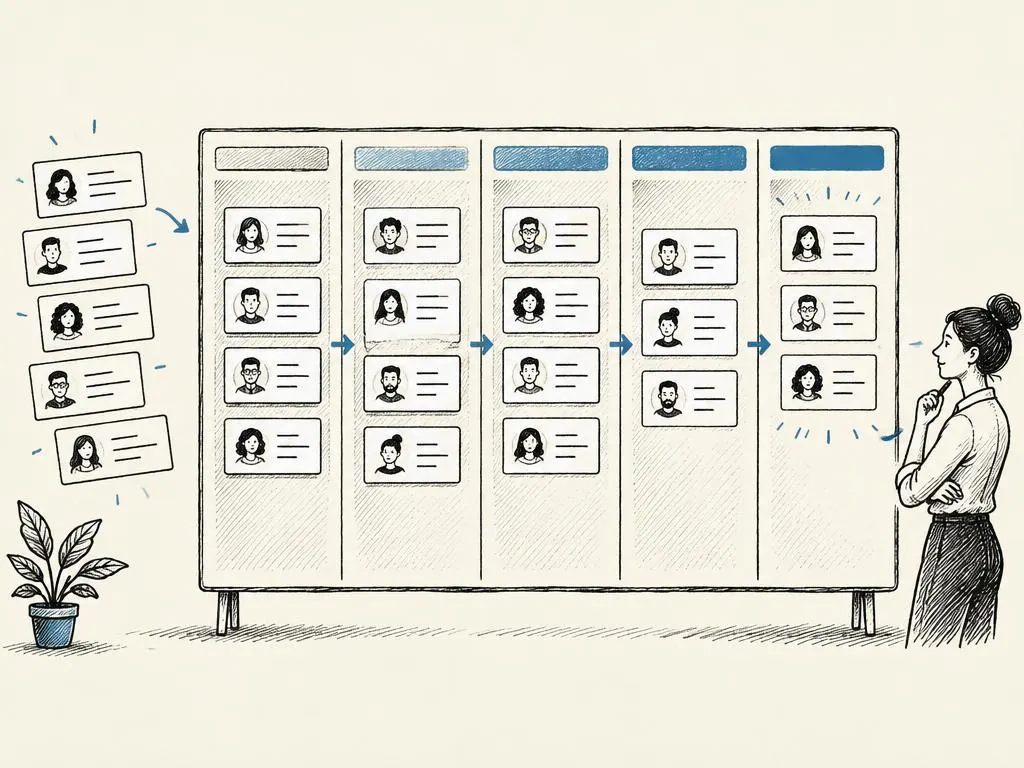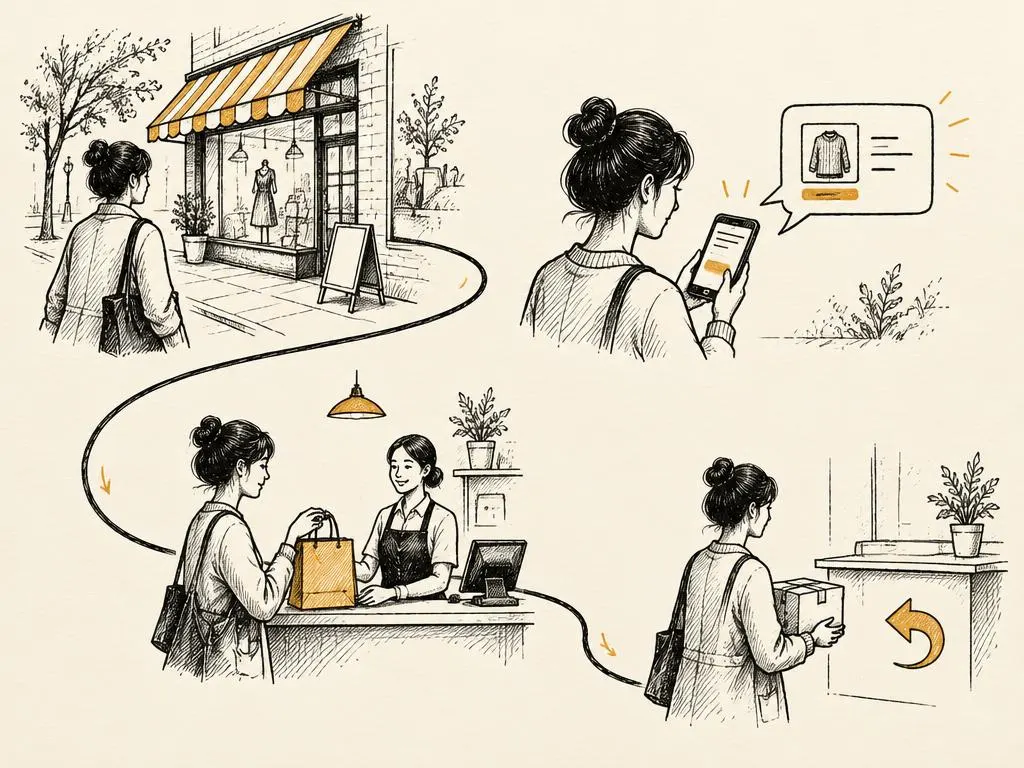
The marketing funnel is a model, not a law of nature. It describes four stages a customer typically moves through on the way to becoming, and staying, a customer: awareness, consideration, conversion, and retention. It's called a funnel because, at each stage, some people drop off; out of everyone who becomes aware of a business, only a fraction will consider it, and only a fraction of those will convert. Understanding the funnel helps you match your message, content, and metrics to where a person actually is, instead of pitching a sale to someone who has never heard of you.
The four stages
Awareness
At this stage, the person doesn't yet know your business exists, or barely remembers it. The right message is broad and attention-earning, not a hard sell. Appropriate metrics include reach, impressions, and new visitors, understanding that these are activity metrics, not business outcomes on their own.
Consideration
The person knows you exist and is now comparing you against alternatives, including doing nothing. The right message addresses their specific problem, shows credibility, and answers likely objections. Appropriate metrics include return visits, content engagement, email signups, and time spent on key pages.
Conversion
The person is ready to act. The right message removes friction: clear pricing, a simple process, reassurance about risk (guarantees, reviews, clear terms). Appropriate metrics include conversion rate, cost per acquisition, and average order or deal value.
Retention
The person has bought once. The right message is about follow-through: onboarding, usage tips, replenishment reminders, or renewal communication. Appropriate metrics include repeat purchase rate, churn rate, and customer lifetime value.
Funnel shorthand vs real buying journeys
In reality, people rarely move neatly from awareness to consideration to conversion in one pass. Someone might see an ad (awareness), forget about it for three months, search for the business directly later (a kind of re-entry into consideration), read reviews, abandon a cart, come back after an email reminder, and finally buy. The funnel is a useful simplification for organizing messages and metrics, but treating it as a literal, one-way pipe will cause you to under-invest in reminder and win-back content for people who didn't convert the first time.
Illustrative values for a hypothetical campaign. Actual drop-off rates vary enormously by industry, price point, and sales cycle length.
Connecting the funnel to sales follow-up
For businesses with a sales process, consideration and conversion often involve a human: a discovery call, a quote, a follow-up email. The funnel doesn't stop being a marketing concern once a lead is handed to sales; a lead that goes cold because nobody followed up within a reasonable window is a funnel failure, even though marketing 'did its job' generating the enquiry. Agree with sales on response-time expectations and track how many qualified leads actually get followed up, not just how many were generated.
Stage-by-stage worksheet (deliverable)
| Stage | One key question to ask the customer | One metric to track |
|---|---|---|
| Awareness | Where would this person naturally encounter us first? | Reach or new visitors |
| Consideration | What objection or comparison are they working through? | Return visits or content engagement |
| Conversion | What's the one piece of friction stopping them right now? | Conversion rate |
| Retention | What would make them come back or stay subscribed? | Repeat purchase or churn rate |
Common mistakes
- Pitching a hard sale to a cold audience that has never heard of the business (skipping awareness and consideration).
- Measuring only conversion-stage metrics and ignoring why people drop off earlier.
- Assuming every visitor moves through the funnel in one session instead of over weeks or months.
- Neglecting retention entirely, treating the first sale as the finish line.
- Blaming marketing for a lead that converted poorly due to a slow or absent sales follow-up.
When the funnel model isn't the right lens
For businesses with very short, low-consideration purchases, for example an impulse-buy snack brand sold in grocery stores, the consideration stage may be nearly instantaneous, and a heavier framework like a full funnel analysis can be overkill; a simpler awareness-to-purchase view may be more useful. For highly habitual repeat-purchase products, it can be more useful to focus analysis on the retention loop itself (see the article on customer lifecycle and retention loops) rather than re-running new customers through the full funnel analysis every time.