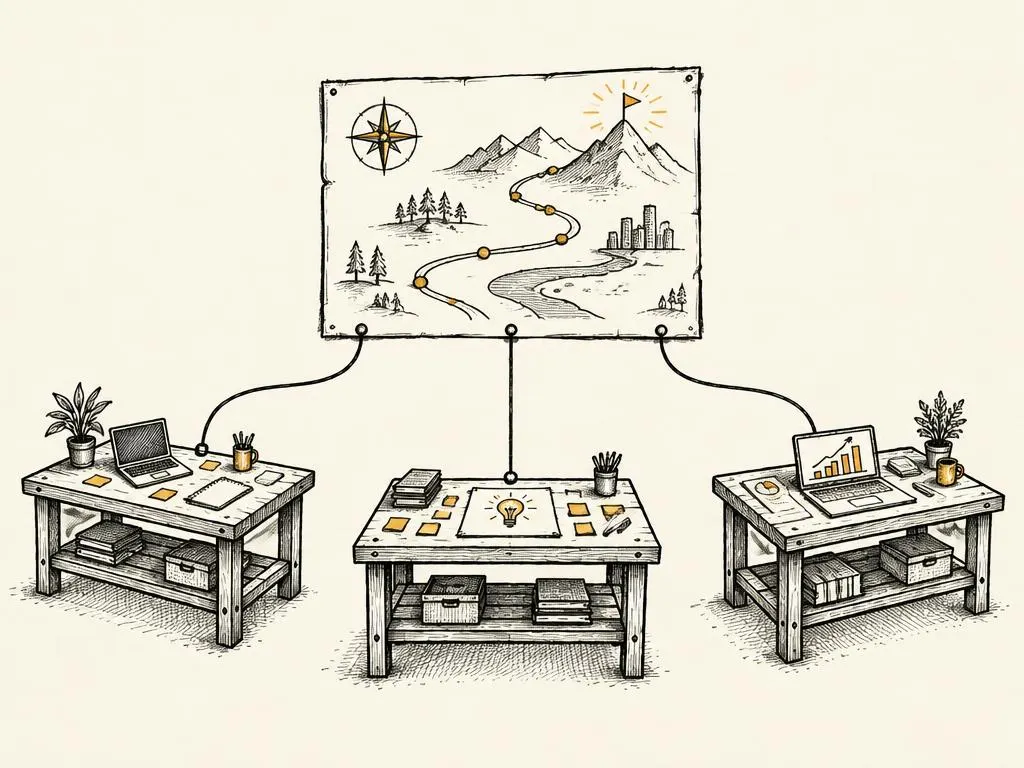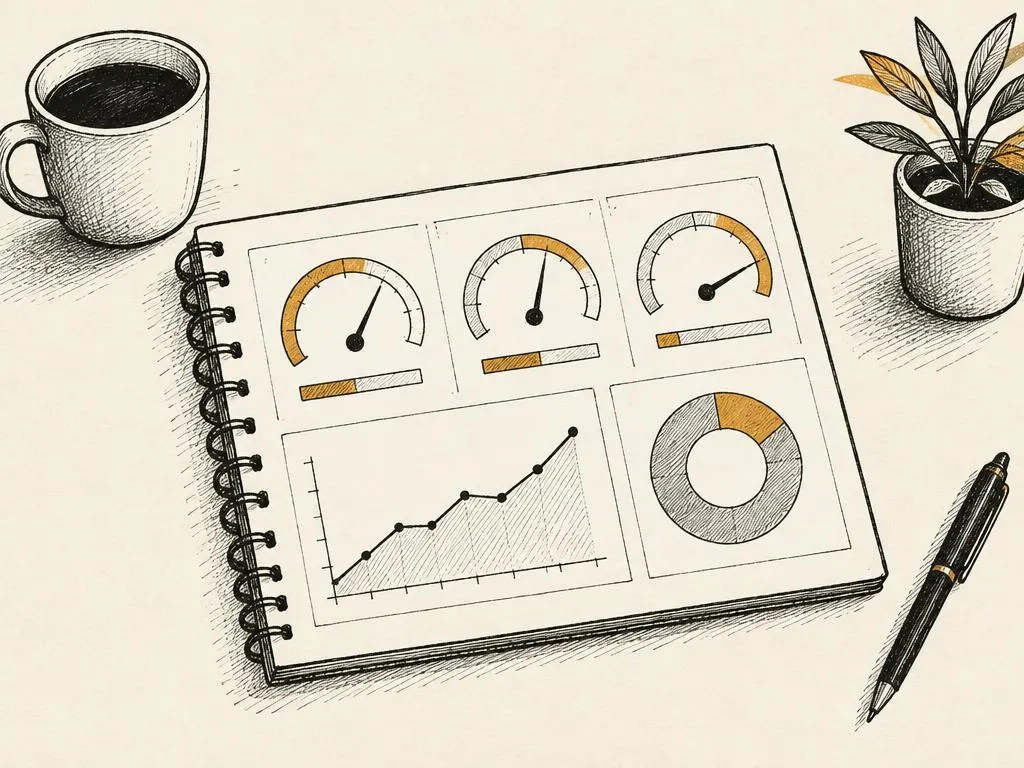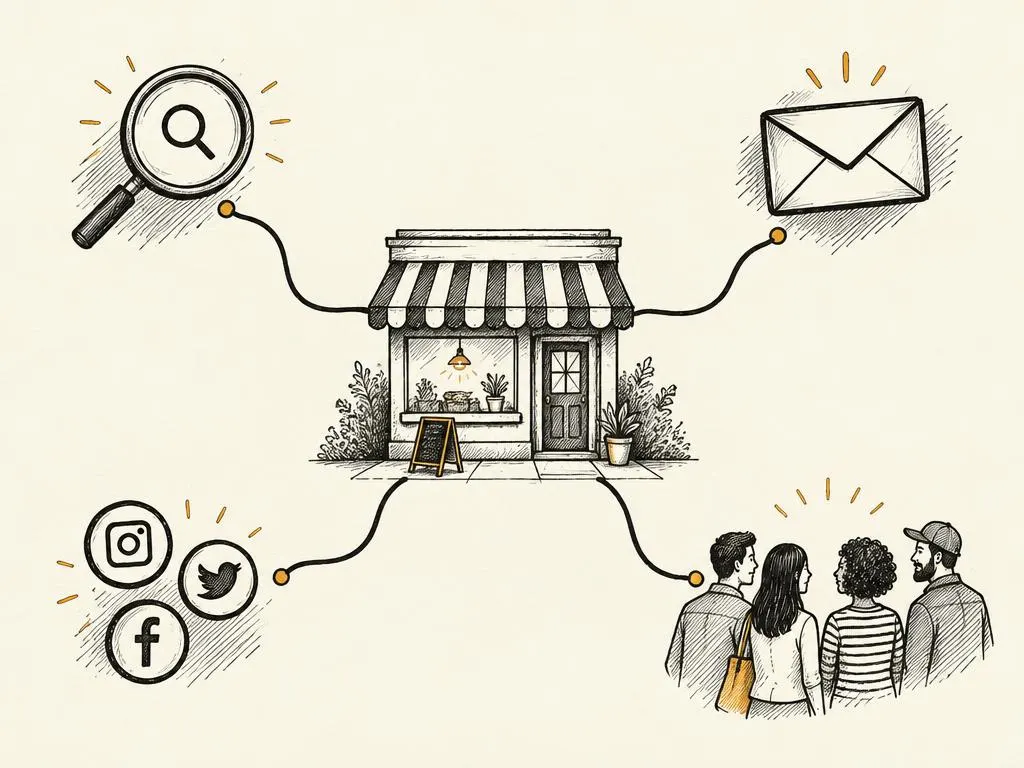
Digital marketing is the practice of promoting a business and communicating with customers through online channels, in order to generate awareness, enquiries, purchases, and repeat business. It includes paid advertising, but it is not the same as advertising: digital marketing also covers your website, your email list, your social media presence, and how people find and talk about you organically. Understanding this full scope matters because businesses that only think 'marketing equals ads' tend to under-invest in the owned and earned channels that often produce the most durable growth.
Marketing versus advertising
Advertising is paying a platform or publisher to show your message to an audience, for example a search ad, a social media ad, or a sponsored placement. Marketing is the much broader set of decisions: who you target, what you offer, how you price it, what you say, which channels you use, and how you keep customers after the first sale. Advertising is one tool marketing uses; it is not a synonym for it. A business can run excellent advertising and still fail at marketing if the offer is unclear or the product doesn't match customer needs, and conversely a business with no ad budget can still market effectively through content, referrals, and email.
Paid, owned, and earned channels
A useful way to organize digital channels is by who controls them.
- Paid channels: advertising you pay for directly, such as search ads, social media ads, and display or video ads. You control the message and timing, but reach stops when spend stops.
- Owned channels: assets you control fully, such as your website, blog, email list, and app. These compound over time and don't disappear when a budget runs out.
- Earned channels: attention you influence but don't control directly, such as organic search rankings, word of mouth, reviews, press coverage, and unpaid social shares.
| Channel type | Who controls it | Example | Typical strength |
|---|---|---|---|
| Paid | You, as long as budget continues | Search or social ads | Fast, controllable reach |
| Owned | You, indefinitely | Website, email list | Compounds over time, no rental cost |
| Earned | Influenced, not controlled | Organic rankings, reviews, shares | High trust, harder to predict |
Connecting channels to business outcomes
Every channel should ladder up to one of four business outcomes: awareness (people learn you exist), enquiries or leads (people express interest), purchases (people buy), and retention (people buy again or stay subscribed). A channel that only produces impressions without ever contributing to enquiries or purchases is not necessarily useless, brand awareness has value, but it needs to be labelled and measured as an awareness activity, not confused with a sales channel.
A service business versus an ecommerce example
Why clicks alone are not enough
Clicks, impressions, likes, and followers are activity metrics: they show that something happened, not that the business benefited. A campaign can generate thousands of clicks and zero enquiries if the landing page is unclear, the offer doesn't match the ad, or the audience was never a good match. Always ask what the click led to: did it produce an enquiry, a sale, or a subscriber? If you can't answer that, the metric is incomplete for decision-making, even if it looks impressive in a report.
Illustrative values. Campaign A has far more clicks but a weaker match between ad promise and landing page, producing fewer enquiries than the smaller Campaign B.
Channel-to-business-outcome worksheet (deliverable)
Use this worksheet to map your own channels to outcomes before spending time or money on any single tactic.
| Business outcome | Channel(s) you'll use | How you'll know it worked |
|---|---|---|
| Awareness | e.g. organic social, content, paid social | Reach, unique visitors, branded search volume |
| Enquiry / lead | e.g. website contact form, landing page, DMs | Number of qualified enquiries per week |
| Purchase | e.g. checkout, booking page, sales call | Conversion rate from enquiry to sale |
| Retention | e.g. email flows, loyalty, follow-up calls | Repeat purchase rate or renewal rate |
Common mistakes
- Treating 'marketing' and 'advertising' as interchangeable, which leads to ignoring owned and earned channels.
- Running paid ads to a vague or outdated website instead of fixing the owned channel first.
- Measuring only top-of-funnel activity (likes, impressions) without tracking enquiries or sales.
- Copying another business's channel mix without checking whether their customer behavior matches yours.
- Forgetting retention entirely and only ever optimizing for new customer acquisition.
When this framework is not the right fit
For a very early-stage idea with no product yet, spending time mapping channels to outcomes is premature; validate the offer and talk to potential customers first (see customer research). For a business with only one realistic channel, for example a hyper-local service that relies entirely on word of mouth and a Google Business Profile, a full paid/owned/earned framework may be more structure than is useful; focus energy on that one channel and keep the framework as a future reference.