Agencies and marketers often describe themselves as 'digital marketing', 'growth marketing', or 'performance marketing' specialists, and each term implies a different way of working. Choosing the wrong model for your business stage and constraints wastes budget even if the execution is good. This article assumes you already understand the basic definitions of these terms (covered in an earlier foundational article) and focuses on the applied decision: which approach, or combination, fits your specific business.
A quick refresher on the three models
Digital marketing is the broadest umbrella: any marketing conducted through online channels, including brand-building content, SEO, social presence, and paid acquisition, often pursued together. Growth marketing is an experimentation-driven approach focused on finding and scaling compounding loops across the full customer lifecycle, commonly associated with product-led and subscription businesses. Performance marketing is a narrower, direct-response discipline focused on channels with trackable, attributable conversions, typically paid search and paid social, optimized tightly against cost-per-acquisition or ROAS targets.
The six factors that actually decide the fit
1. Business stage
Pre-product-market-fit businesses usually benefit most from growth marketing's experimentation mindset, since the goal is learning what resonates, not scaling a proven channel yet. Established businesses with a proven offer and repeatable sales process can often go straight to performance marketing for efficient scale.
2. Buying cycle length
Short buying cycles (impulse or low-consideration purchases) suit performance marketing because conversions happen quickly enough to optimize against. Long buying cycles (considered B2B purchases, high-ticket services) need brand and trust-building content over months, which performance-only approaches tend to underfund because it doesn't show immediate attributable conversions.
3. Cash flow tolerance
Performance marketing can deliver faster, more visible returns but usually requires sustained spend to keep scaling; growth marketing's compounding loops (like referral or content loops) often take longer to build but can reduce dependency on continuous ad spend. A business with limited cash runway needs to be realistic about which timeline it can actually survive.
4. Brand-building need
Businesses competing on trust, reputation, or premium positioning (professional services, healthcare-adjacent, high-ticket B2B) need sustained brand-building content that a pure performance approach does not prioritize, since brand impact is harder to attribute to a single conversion.
5. Data readiness
Performance marketing depends on clean, defined conversion tracking. A business without reliable attribution, clear conversion definitions, or enough volume for algorithms to optimize against will get misleading signals from a performance-only approach, regardless of ad spend.
6. Sales capacity
Growth and performance marketing can both generate more leads than a business can actually follow up on. If sales or fulfilment capacity is the real constraint, more acquisition spend of any model makes the bottleneck worse, not better.
| Factor | Performance marketing fit | Growth marketing fit | Digital marketing (broad) fit |
|---|---|---|---|
| Buying cycle | Short, low consideration | Varies, often product-led | Medium to long, mixed |
| Data readiness needed | High | Medium to high | Low to medium |
| Timeline to results | Weeks | Months, compounding | Months to a year for brand |
| Best business stage | Proven offer, scaling | Early to mid stage, experimenting | Any stage needing broad presence |
The weighted decision matrix
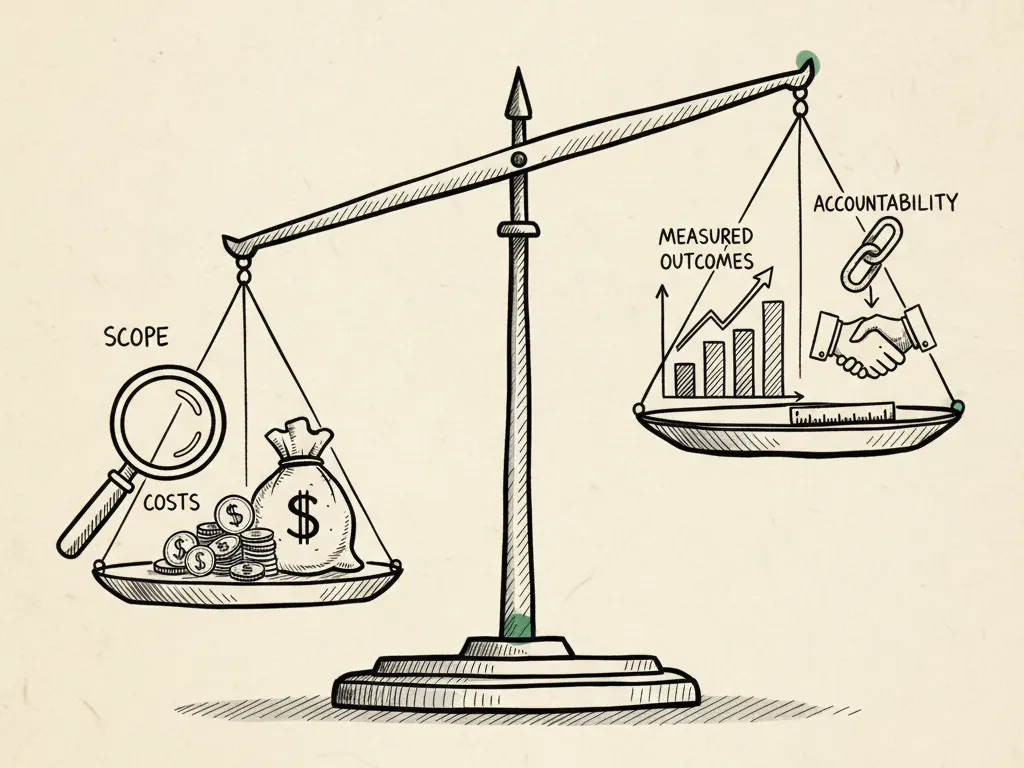
Score your business 1-5 on each factor below, multiply by the suggested weight, and sum per model. Higher totals indicate a stronger fit; close scores across two models usually indicate a hybrid is the right call.
| Factor | Weight | Performance score driver | Growth score driver |
|---|---|---|---|
| Buying cycle length | 3 | Short cycle scores high | Mid-length, repeat-purchase cycle scores high |
| Cash flow tolerance | 2 | Needs sustained spend tolerance | Needs patience for compounding, less cash intensity |
| Data readiness | 3 | Needs clean tracking already in place | Can tolerate rougher data if experiments are small |
| Brand/trust need | 2 | Lower emphasis | Medium emphasis via content loops |
| Sales capacity | 2 | Needs capacity to handle fast lead volume | Needs capacity to service compounding growth |
- 1Score your business 1-5 on each of the six factors
- 2Multiply each score by its weight and total per model
- 3Identify the clear leader, or note a close hybrid result
- 4Check sales/fulfilment capacity as a hard constraint regardless of score
- 5Pilot the leading model with a small, time-boxed budget before committing fully
When a hybrid is the right answer
Many real businesses are not a clean fit for one label. A common and sound hybrid is running brand-building content and SEO (digital marketing) to build long-term discovery and trust, while running a smaller, tightly tracked performance layer (search ads on high-intent terms) for faster, attributable leads, and layering in growth-style experimentation on retention and referral once there are enough customers to test with. The mistake is not combining models; it is combining them without clarity on which budget serves which purpose.
Unsuitable promises to watch for
Be skeptical of any pitch claiming one model is universally correct regardless of your buying cycle, data readiness, or cash position, or that guarantees fast results from an approach that structurally takes longer (for example, promising a growth-loop referral program will deliver predictable monthly revenue before retention has been proven).
Template: your model-fit checklist
- Score your business on all six factors honestly, using real data where available
- Identify whether one model clearly leads or the scores suggest a hybrid
- Confirm sales or fulfilment capacity can absorb the leads the chosen model would generate
- Pilot with a small, time-boxed budget before fully committing spend or agency contracts
- Revisit the scoring at major business changes: new product, new market, funding change
Common mistakes
- Choosing a model because it is trendy or because a competitor uses it, not because of fit.
- Running performance marketing without the data readiness to interpret its signals correctly.
- Expecting growth marketing's compounding loops to produce fast, linear month-over-month gains.
- Treating digital, growth, and performance as mutually exclusive instead of a deliberate hybrid.
- Ignoring sales or fulfilment capacity as a hard constraint on any model's usefulness.
- Committing a full annual budget to one model before piloting it on a smaller scale.
When this is not the right tactic
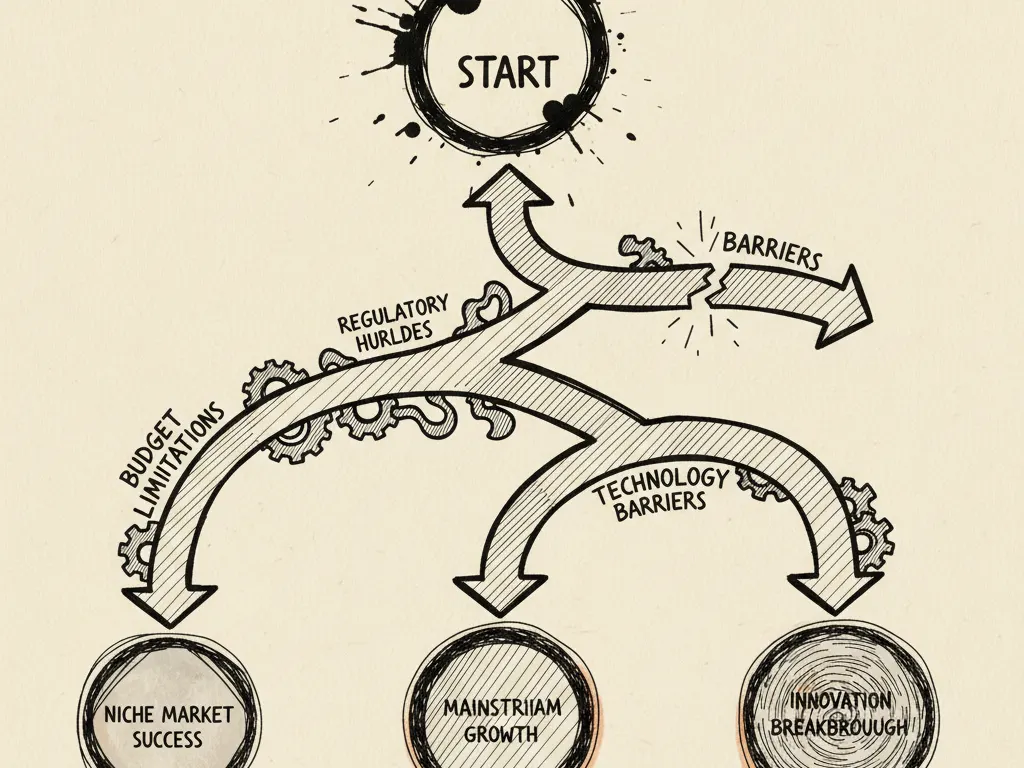
This framework assumes you already have an offer and some initial market signal. If you have no offer validated yet, the right move is a lightweight experimentation phase focused on learning, before formally scoring and committing to any model. It also assumes marketing is the actual constraint; if the real problem is product quality, pricing, or delivery capacity, no model choice will fix that.
Your next step
Score your business against the weighted matrix above, identify the leading model or hybrid, and design a small, time-boxed pilot (4-8 weeks) before committing a full budget or signing a longer agency engagement.