The most common answer to 'how much should I spend on marketing' is a flat percentage of revenue, often cited as somewhere between 5% and 15%. This rule is easy to repeat and almost always incomplete, because it ignores margin, cash timing, and what the business can actually absorb operationally. Two businesses with identical revenue and an identical 10%-of-revenue marketing budget can have completely different outcomes if one has 70% margin and the other has 20%.
Why revenue-percentage rules alone mislead
A percentage of revenue says nothing about what is left over after marketing to cover product costs, delivery, overhead, and profit. A business with thin margins spending 10% of revenue on marketing might be spending a much larger share of its actual contribution margin than a high-margin business spending the same percentage. The rule also ignores cash flow timing: a business collecting cash upfront can tolerate a different spend pace than one with long payment terms or deferred revenue recognition.
The better starting point: margin and payback
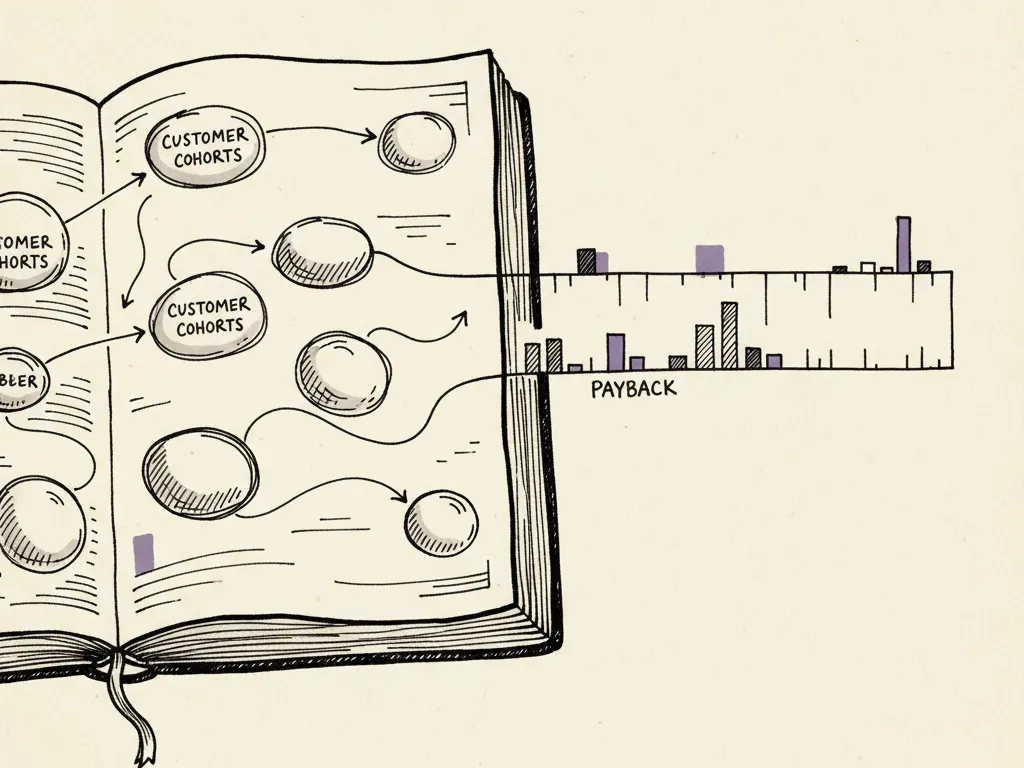
Instead of starting from revenue, start from contribution margin (revenue minus the direct costs of delivering the product or service) and decide how much of that margin you are willing to spend to acquire a customer, and over what time period you are willing to wait to recover it (payback period). This produces a CAC ceiling that reflects your actual business, not an industry average.
Separate fixed and variable marketing costs
A marketing budget mixes two very different cost types. Fixed costs (salaries, software subscriptions, retainers, website hosting) do not scale directly with volume and should be planned annually. Variable costs (ad spend, cost per lead, commission-based affiliate fees) scale with activity and should be modeled against the CAC ceiling and expected volume. Conflating the two makes it hard to see whether a budget increase is actually buying more growth capacity or just more overhead.
| Type | Examples | Planning approach |
|---|---|---|
| Fixed | Salaries, software, retainers, hosting | Set annually, reviewed at major business changes |
| Variable | Ad spend, cost per lead, affiliate commissions | Modeled against CAC ceiling and expected volume |
Build low, base, and high scenarios
Demand and channel performance are uncertain, so a single-number budget is fragile. Build three scenarios: a low scenario assuming weaker channel performance or tighter cash, a base scenario reflecting your most likely estimate, and a high scenario if cash allows and channels perform better than expected, capturing more demand without breaching the CAC ceiling.
Illustrative values for a hypothetical business; actual scenario numbers must be derived from your own margin, cash position, and CAC ceiling.
Reserve a learning budget
Within the variable budget, set aside a smaller, explicit slice (commonly 10-20% of the variable total, adjusted for your risk tolerance) for experiments: new channels, new creative formats, or new audience segments that have not yet proven their CAC. This protects the proven, core spend from being diverted every time a new tactic looks interesting, while still allowing the business to discover new growth paths.
Check operational capacity before finalizing
A budget that generates more leads or orders than the business can fulfil, respond to, or deliver well is not a good budget regardless of its CAC math. Before finalizing, confirm sales follow-up capacity, fulfilment capacity, and customer support capacity can absorb the expected volume at each scenario level.
- 1Calculate contribution margin per customer or order
- 2Set an acceptable payback period to derive a CAC ceiling
- 3Separate fixed costs from variable, CAC-ceiling-bound costs
- 4Build low, base, and high variable-spend scenarios
- 5Reserve a learning-budget slice for unproven channels
- 6Confirm sales, fulfilment, and support capacity can absorb each scenario
Template: the worked budget model
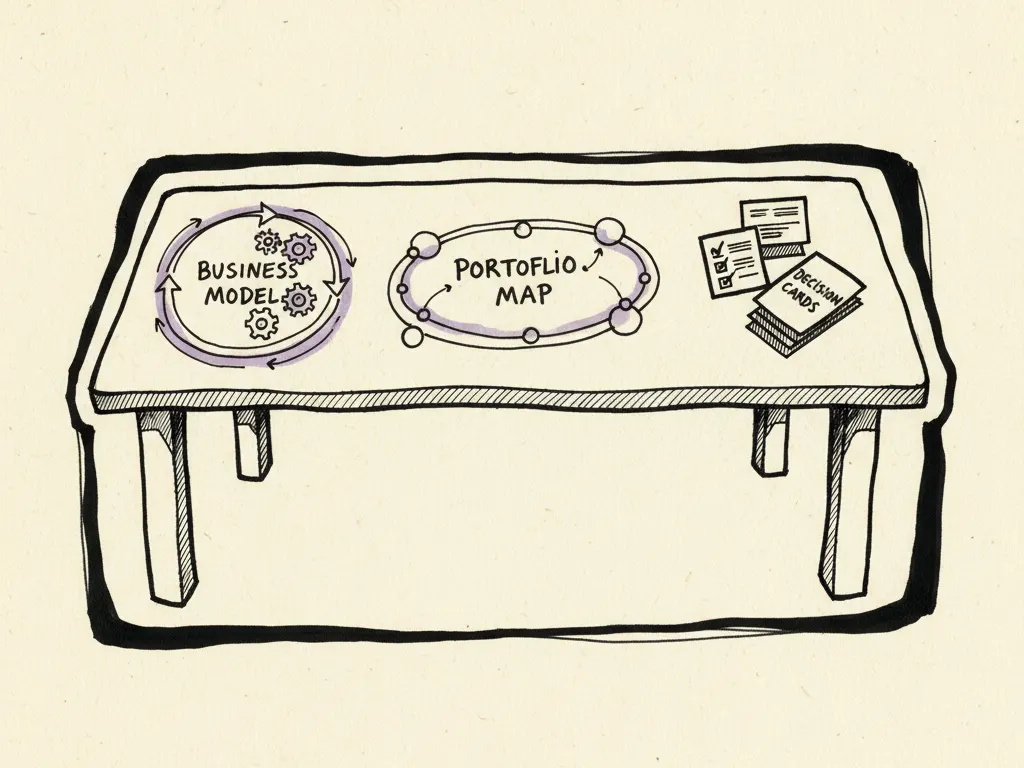
Use this structure as the deliverable for this lesson, filled in with your own numbers:
| Line item | Low scenario | Base scenario | High scenario |
|---|---|---|---|
| Contribution margin per customer | Fill in | Fill in | Fill in |
| CAC ceiling (margin x payback tolerance) | Fill in | Fill in | Fill in |
| Fixed marketing costs | Same across scenarios | Same across scenarios | Same across scenarios |
| Variable marketing spend | Fill in | Fill in | Fill in |
| Learning budget reserve (% of variable) | Fill in | Fill in | Fill in |
| Expected customers acquired | Fill in | Fill in | Fill in |
Common mistakes
- Using a flat percentage of revenue without checking it against actual margin and payback tolerance.
- Mixing fixed and variable costs into one number, hiding whether spend increases buy more growth or just overhead.
- Planning a single-number budget instead of low, base, and high scenarios for demand uncertainty.
- Spending the entire budget on proven channels with no reserve for testing new ones.
- Setting a budget that generates more leads than sales or fulfilment can actually handle.
- Confusing attributed revenue ROAS with profit when deciding whether a budget 'worked'.
When this is not the right tactic
A detailed scenario-based budget model is more structure than a brand-new business with its first few hundred dollars of marketing spend typically needs; in that case, a small, simple test budget focused on learning is more appropriate than scenario planning. This model also assumes the business has at least rough margin and cost data; if those numbers do not exist yet, the first step is establishing basic cost accounting, not budget scenarios.
Your next step
Calculate your contribution margin per customer, choose a payback period you are comfortable with, and derive your CAC ceiling. Then build your own low, base, and high scenario table using the template above before committing to a quarterly budget number.