Growing a business without a large advertising budget is possible, but it is important to be honest about the trade-off: you are substituting time, consistency, and existing assets for cash, not eliminating cost altogether. Content takes hours to write. Email lists take time to build and nurture. Partnerships require real relationship work. None of this is free; it is simply a different kind of investment.
This article lays out a sequence for low-cash growth and a 90-day plan with time estimates and simple measurement, so you can judge honestly what's working rather than assuming activity automatically equals results.
Start by assessing what you already have
Before creating anything new, take stock of existing assets: past customers who could refer others, an email list (even a small or neglected one), content or case studies already written, a professional network, or an audience on a platform you already use personally. These assets often produce faster results than starting from zero, because they already carry some trust.
- Past and current customers who could give a referral or testimonial
- An email list, even a small or inactive one, that could be re-engaged
- Existing content, case studies, or documentation that could be repurposed
- A personal or team network relevant to your target customer
- Partnerships or complementary businesses who serve the same audience
Fix positioning and conversion before adding traffic
A common low-budget mistake is spending all available time creating new content or outreach while the website or sales process quietly wastes most of the traffic that does arrive. If your value proposition is unclear, your page is hard to act on, or your follow-up is slow, more visitors will not fix the underlying leak. Review your messaging (does it clearly state who you serve and what problem you solve), your call to action (is it obvious what to do next), and your response time to enquiries, before investing in content or outreach to grow traffic.
Build owned distribution: content, SEO, and email
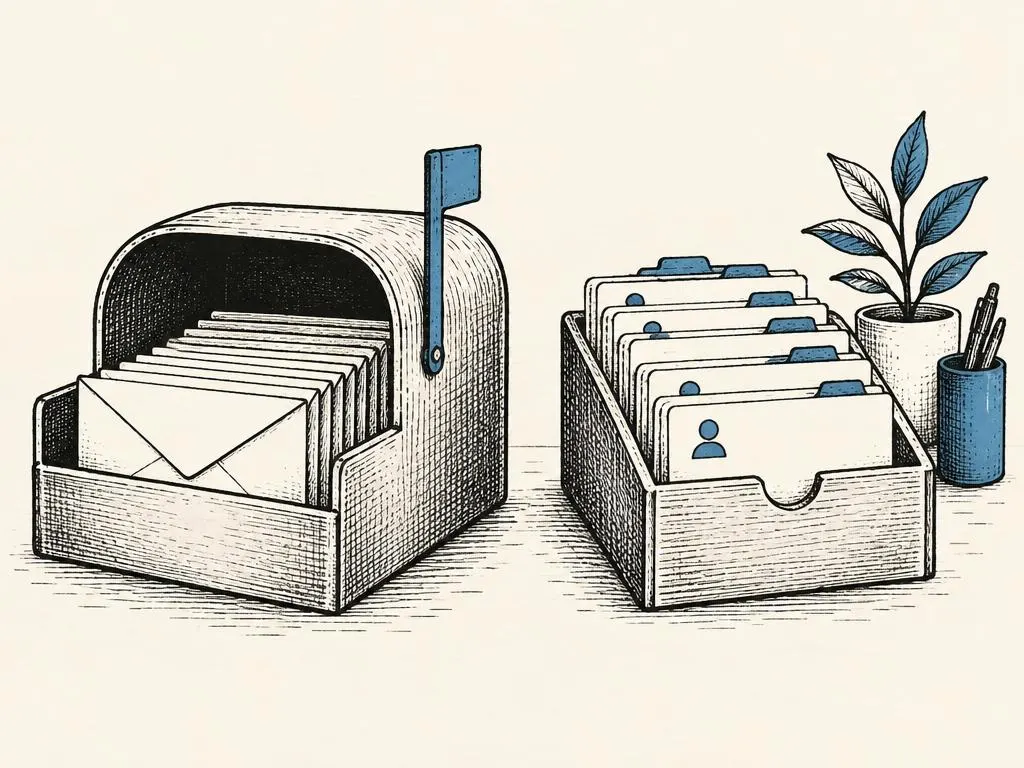
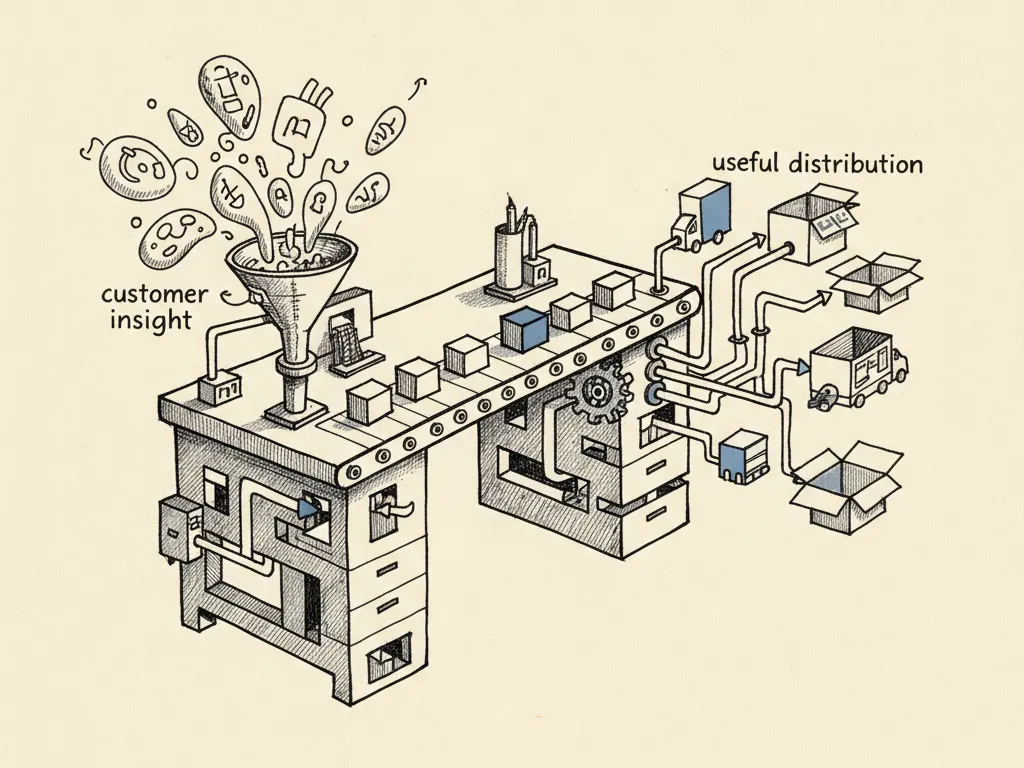
Owned channels, assets you control and that keep working after the initial effort, are the core of most low-cash growth plans. Content built around real customer questions can earn organic search visibility over time. An email list lets you reach your existing audience repeatedly without paying per message. Both require patience: content typically needs months to build meaningful organic traffic, and an email list needs consistent sending to stay engaged rather than going stale.
Prioritize proven customer needs, not trending topics
With limited time, the highest-value content answers questions your actual customers have asked, in sales calls, support tickets, or informal conversations, rather than chasing a trending topic unrelated to your offer. A niche but relevant article that ranks for a real buying question will usually outperform a broad, generic piece that happens to be popular.
Use partnerships and referrals without overpromising
Relevant partnerships, for example with a complementary business that serves the same audience but doesn't compete directly, can produce qualified leads at low direct cash cost. However, these relationships take real time to build: identifying the right partners, reaching out, proposing a mutually beneficial arrangement, and maintaining the relationship. Treat partnership-building as a weekly task with its own time budget, not a one-off email you send and forget.
A 90-day low-cash growth plan with time estimates
Use this structure as a planning template, adjusting the specific tasks to your business and available hours per week.
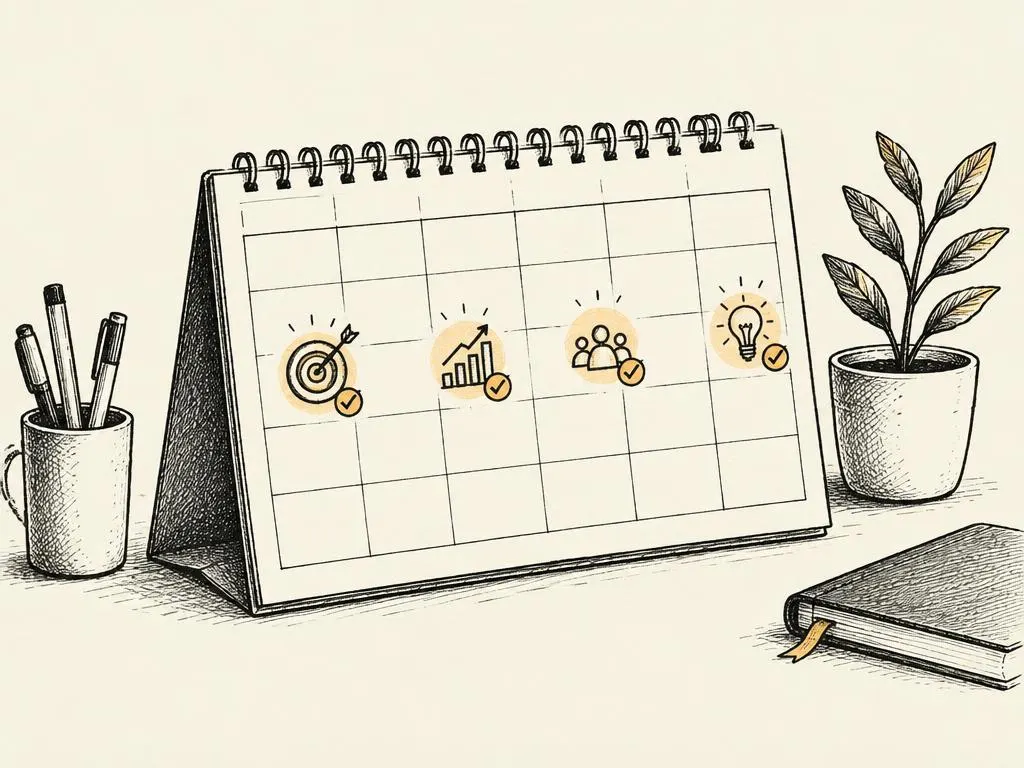
- Days 1-10: audit positioning and conversion path; rewrite your core value proposition and call to action (estimate 5-8 hours).
- Days 11-20: re-engage existing customers and contacts for referrals, testimonials, or reviews (estimate 3-5 hours).
- Days 21-50: publish content answering 3-5 real customer questions, optimized for search where relevant (estimate 3-4 hours per piece).
- Days 21-50 in parallel: set up or clean an email list and send one useful message every one to two weeks (estimate 2 hours per send).
- Days 51-80: identify and approach 3-5 potential partners or referral sources; propose a specific, mutually beneficial arrangement (estimate 2-3 hours per week).
- Days 81-90: review which channel produced the most qualified enquiries relative to time spent, and decide where to focus the next 90 days.
Measuring progress without a media budget
Even without ad spend, you can measure honestly. Track enquiries by source in a simple spreadsheet, note the hours spent per channel each week, and periodically calculate a rough qualified leads per hour figure for each channel. This won't be a precise return on investment (ROI) calculation, since time has a cost too, but it will reveal which activities are actually producing qualified interest versus which feel productive but aren't.
Illustrative values from the hypothetical consultant example above; not a benchmark for any real business.
Common mistakes
- Treating low-budget growth as free and underestimating the real time cost of content, email, and outreach.
- Creating new content or outreach before fixing an obviously weak conversion path, wasting the effort on leaky traffic.
- Spreading thin across too many channels instead of focusing on one or two with the highest existing-asset advantage.
- Expecting SEO or content results within weeks, when meaningful organic traffic typically takes months to build.
- Approaching partnerships as a single outreach email rather than an ongoing relationship with mutual value.
When this approach is not the right fit
If a business needs revenue within a tight, short window (for example, meeting payroll next month) and has no existing audience, list, or customer base to re-engage, low-cash organic growth is unlikely to move fast enough on its own. In that situation, even a very small, carefully targeted paid budget, aimed at a narrow, high-intent audience, may produce faster results than a purely organic plan, even though it requires some cash.
Where to go next
Read the article on choosing the best marketing channels for your business for a framework on evaluating audience fit and cost before committing time, and the article on building an email list from zero for the mechanics of the email channel referenced in this plan.