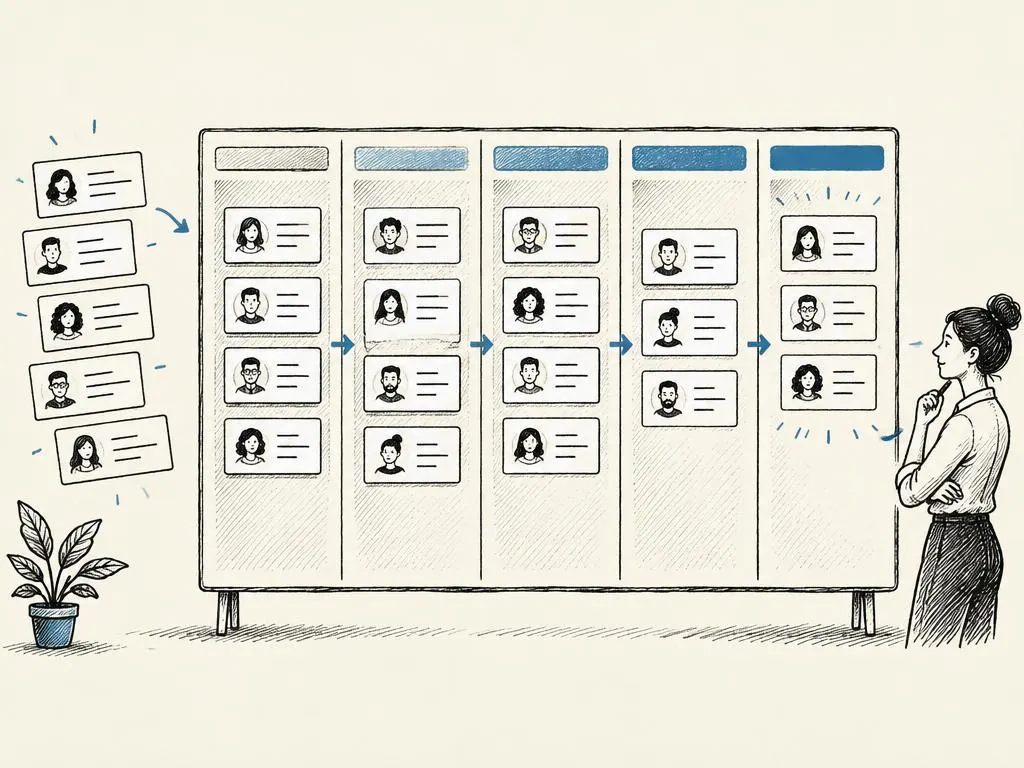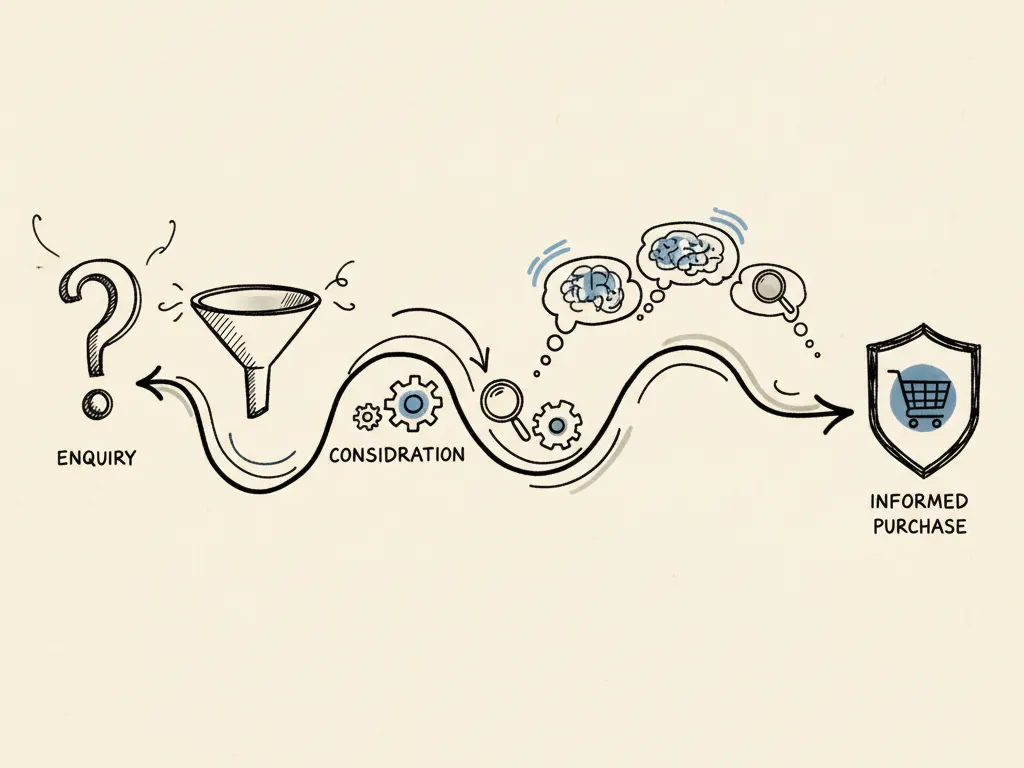
If marketing is generating leads but sales isn't closing them, the instinct is often to generate more leads. That usually makes the problem worse, not better, because it adds volume to a leaky process instead of fixing the leak. Before changing lead volume, diagnose where leads are actually stalling between 'enquired' and 'paid.'
The six places leads commonly stall
Lead-to-customer conversion problems almost always trace back to one or more of six stages. Working through them in order, rather than guessing, saves time.
- Qualification: are you calling unqualified people 'leads' and then blaming sales for not closing them?
- Response time: how long between a lead's action (form fill, demo request, call) and the first human or automated response?
- Nurture: what happens to leads who aren't ready to buy today, before they go cold?
- Offer fit: does what you're selling actually match what the lead asked about, at a price and format they can say yes to?
- Sales process: is there a clear, repeatable sequence of calls, proposals, and follow-ups, or does it vary by rep and mood?
- Lost reasons: do you systematically record why deals were lost, or does that knowledge live only in reps' heads?
Segment leads by intent before you measure anything
Treating every lead the same is a common cause of poor conversion. A visitor who downloaded a broad 'beginner's guide' and a visitor who requested a live demo or quote are not equally close to buying. Segment leads into at least two groups: high-intent (requested pricing, demo, consultation, or quote) and research-intent (downloaded educational content, subscribed to a newsletter). High-intent leads need fast, direct follow-up; research-intent leads need a longer nurture sequence that builds trust before a sales conversation makes sense.
Why response time matters more than most teams think
Speed of first response is one of the most consistently cited factors in whether a lead converts, because buyers often contact multiple options at once and respond to whoever engages first with something useful. This does not mean instant automated replies alone solve the problem; a fast but generic reply can feel worse than a slightly slower, specific one. The goal is a fast, relevant first response, not just a fast one.
Assigning ownership so leads don't fall through the cracks
A large share of 'lost' leads are not lost to a competitor; they are lost to ambiguity about who was supposed to follow up. Marketing assumes sales is calling; sales assumes the lead wasn't qualified; nobody follows up. Fixing this requires a written handoff agreement, not a verbal understanding, so responsibility is unambiguous even when people are busy or change roles.
A handoff SLA template
A service level agreement (SLA) between marketing and sales defines what counts as a qualified lead, who owns it at each stage, and the maximum time allowed before action. Use a simple written table like this as a starting template, adapted to your business:
| Lead type | Owner | Response time target | Next action | Escalation if missed |
|---|---|---|---|---|
| High-intent (demo/quote request) | Sales rep assigned by territory | Within 1 business hour | Call or personalized email referencing their specific request | Team lead notified after 4 hours |
| Research-intent (content download) | Marketing automation, then sales after engagement | Within 24 hours | Add to nurture sequence; flag for sales if they engage further | Reviewed weekly in pipeline meeting |
| Referral or warm introduction | Senior sales rep | Same business day | Personal outreach acknowledging the referral source | Owner notified if unanswered after 1 day |
Measuring conversion by cohort, not by calendar month
Comparing this month's leads to this month's sales understates performance for any business with a sales cycle longer than a few days, because leads from October may not close until December. Instead, group leads by the month they entered the funnel (a cohort) and track what percentage of that specific cohort eventually became paying customers, even if that happens weeks or months later. This reveals the true conversion rate and avoids the false conclusion that a campaign 'failed' simply because its leads hadn't closed yet when you looked.
Designing one experiment instead of changing everything
Once you've identified the weakest stage using the diagnosis above, test a single change against a control group rather than overhauling the whole process at once, which makes it impossible to know what worked.
- 1Pick the one stage with the clearest leak (e.g., response time for high-intent leads)
- 2Define the control group (current process) and the test group (new process)
- 3Change exactly one variable (e.g., respond within 15 minutes instead of same-day)
- 4Run for long enough to see the full sales cycle complete, not just activity metrics
- 5Compare cohort conversion rate and revenue between control and test groups
- 6Roll out the change permanently only if the test group outperforms meaningfully
Common mistakes
- Blaming sales for low conversion when the real issue is unqualified leads or slow response time.
- Measuring conversion in the same month leads arrive, ignoring realistic sales-cycle lag.
- Treating all leads identically regardless of stated intent or readiness to buy.
- Never recording why specific deals were lost, so the same preventable objections repeat.
- Running several process changes simultaneously, making it impossible to attribute improvement to any one of them.
- Pressuring unsuitable buyers to close short-term, which increases refunds, churn, or support cost later.
When this is not the right tactic
If lead volume itself is too low to form meaningful cohorts (for example, fewer than roughly 20-30 leads per month), detailed cohort analysis and A/B-style experiments may produce noisy, unreliable conclusions; focus first on manual review of each individual lead and qualitative conversation with the people closing deals. If your sales process already closes most qualified leads efficiently and the real constraint is lead volume or lead quality upstream, the higher-leverage fix is improving targeting and qualification criteria, not re-engineering a handoff process that isn't the bottleneck.
Your deliverable
Produce two things from this lesson: a written handoff SLA table (using the template above, adapted to your lead types) and a one-page experiment brief that names the single stage you are testing, the control and test conditions, the metric you will use to judge it, and the minimum time window needed to see results through a full sales cycle.