Retargeting (showing ads to people who already interacted with your business, also called remarketing) is one of the highest-intent tactics available because it reaches people who have already shown some interest. It is also one of the easiest tactics to misuse: a single generic ad shown to everyone who ever visited the site, with no exclusions and no attention to frequency, wastes budget and can annoy the exact people you want to convert. This article covers how to build retargeting that respects intent and attention.
Match the message to recent intent
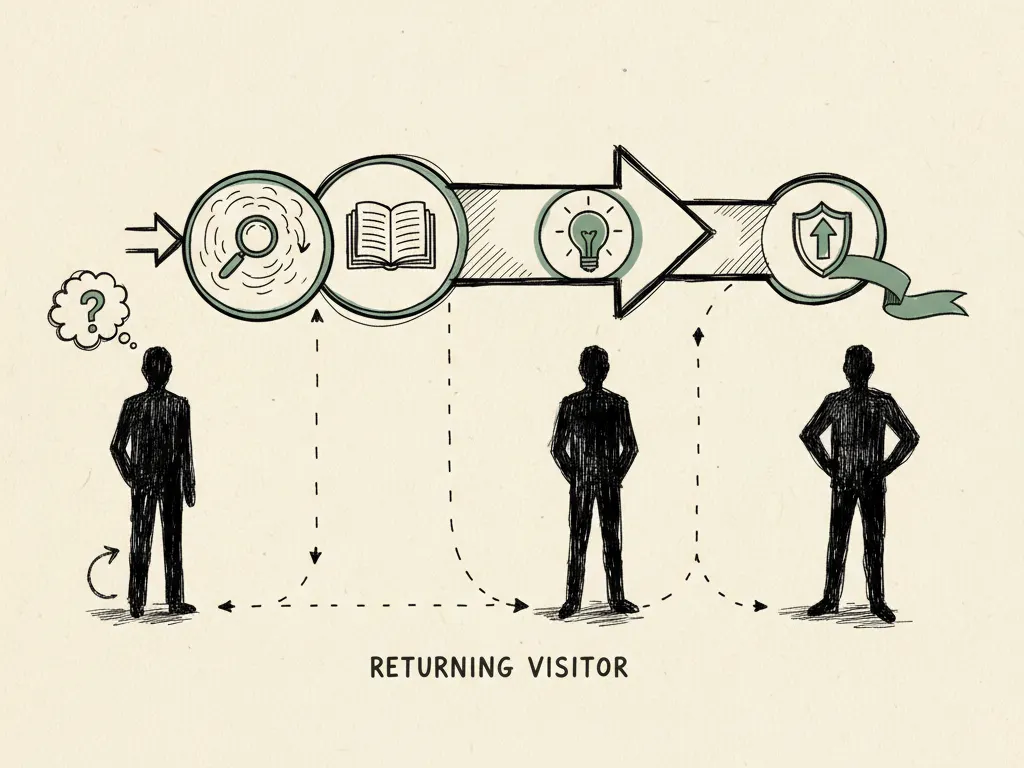
Not every website visitor is in the same place. Someone who added a product to cart and left is closer to buying than someone who viewed the homepage for ten seconds. Treating both the same, with one generic 'come back' ad, wastes the specificity that makes retargeting valuable in the first place.
- Cart or checkout abandoners: a message addressing a likely objection (shipping cost, sizing, a question) or a reminder of what's waiting, rather than a broad brand ad.
- Product page viewers who did not add to cart: a message reinforcing the product's value or showing it in use, since they may need more convincing than a returning cart abandoner.
- Past purchasers: a message suited to repeat purchase, complementary products, or loyalty, not a first-purchase discount that undervalues their existing relationship.
- General site visitors with no specific product engagement: a broader brand or offer message, since you have less specific signal to work with.
Check whether the audience is actually big enough
A retargeting audience built from, for example, 30-day cart abandoners might be too small for a low-traffic site to deliver reliably or to read results from with any confidence. Before building a detailed retargeting structure, check audience size estimates and consider widening the time window (30, 60, or 90 days) or combining related audiences if any single segment is too small to deliver consistently or to support meaningful measurement.
Use exclusions deliberately
Exclusions stop budget from being spent on people who no longer need to see a particular ad. Without them, a recent purchaser can keep seeing an acquisition discount they already missed, or a cart abandoner who already bought elsewhere keeps seeing reminders for a product they no longer want.
- Exclude recent purchasers from acquisition-stage retargeting offers for the same product, and move them into a separate post-purchase or cross-sell audience.
- Exclude people who already converted on a specific goal (booked a call, submitted a form) from ads promoting that same action.
- Exclude current customers from new-customer-only discount codes, both to save budget and to avoid training loyal customers to wait for discounts.
- Periodically review time windows so very old, likely-cold visitors aren't being charged against a 'recently engaged' audience.
Monitor frequency before it becomes a problem
Frequency is the average number of times a person in your audience has seen the ad over a given period. Some repetition is normal and even useful for recall, but rising frequency paired with falling click-through rate or rising negative feedback is a common early sign of fatigue. There is no single frequency number that is right for every audience or ad format; the signal to watch is the trend in combination with other metrics, not an isolated number.
Illustrative values. Bars represent hypothetical CTR percentage as frequency rises across four weeks for one retargeting audience; not real client data.
Don't assume the ad caused the sale
Retargeting frequently shows a strong return on ad spend (ROAS) figure in platform reporting, because it targets people already close to purchasing. Some portion of those purchases would likely have happened without the ad; the person was already heading toward checkout. This doesn't mean retargeting is worthless, but it does mean an impressive attributed ROAS is not proof of causation. Where possible, compare periods with and without retargeting active for a comparable audience, or run a holdout group, to get a more honest read on incremental value.
Build a retargeting journey map and waste-detection checklist
The deliverable for this lesson combines a journey map (which message goes to which intent stage) with a checklist for catching waste before it accumulates.
- Each intent stage (viewer, cart abandoner, purchaser) has its own message, not one generic ad
- Recent purchasers are excluded from acquisition-stage offers for the same product
- Audience size estimates are checked before launch to avoid unreliable delivery
- Frequency and click-through rate are reviewed weekly, not left unchecked for months
- Attributed ROAS is treated as a signal and, where possible, checked against a holdout or period comparison
Common mistakes
- Running one generic retargeting ad for everyone who ever visited the website, regardless of what they did.
- Never excluding recent purchasers, so converted customers keep seeing acquisition discounts.
- Letting frequency climb for weeks without checking whether click-through rate is declining alongside it.
- Reporting raw retargeting ROAS to leadership as if every dollar of attributed revenue was caused by the ad.
- Building retargeting audiences so narrow they rarely deliver and produce results too small to read with confidence.
When this is not the right tactic
Retargeting depends on having enough existing traffic or engagement to build a meaningful audience; a brand with very little website traffic or social engagement may not have enough people to retarget yet, and should focus on acquisition and content first. Businesses with long consideration cycles and few repeat purchases, such as a one-time major purchase, also need to be more careful about frequency, since the same small audience may be shown ads for weeks without a natural reason to convert again soon.