A content brief is the document a writer receives before drafting an article. A weak brief lists a keyword and a rough word count, which produces generic, interchangeable content. A strong brief defines who the reader is, what they're actually trying to do, and what this specific piece must deliver that a quick search doesn't already answer well. This article gives a reusable template and a worked example, so you can brief your next article, or your own writing, in a way that produces something genuinely useful.
Why briefs matter more than keyword lists
Search engines and AI-powered answer tools increasingly reward content that resolves a reader's task clearly and demonstrates real expertise, rather than content that simply repeats a target phrase. A brief forces you to think about the reader's task before structure, which naturally produces headings that match how a person actually researches a decision, not an artificial list built around a keyword tool's suggestions.
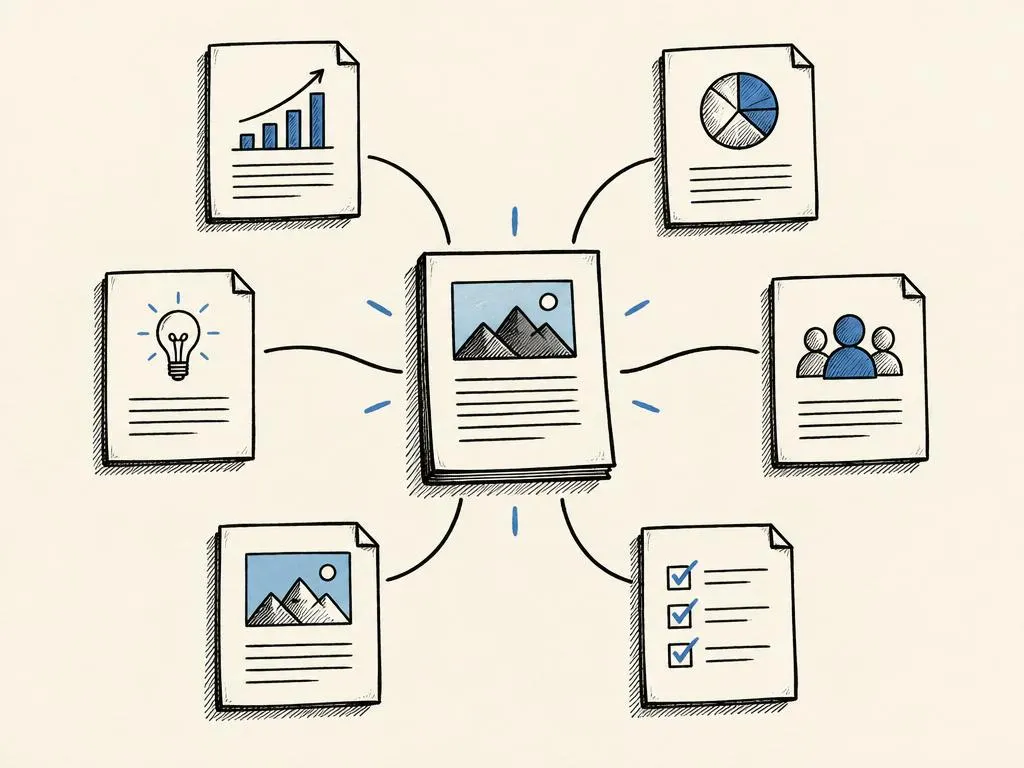
- 1Reader: who is this for, and what do they already know?
- 2Task and intent: what are they trying to do or decide?
- 3Scope: what must be covered, and what is explicitly out of scope?
- 4Evidence: what examples, data, or sources will make this credible?
- 5Structure: headings in the order a reader would actually need them
- 6Internal links: which existing pages should this connect to?
- 7Unique value: what will this piece offer that competing pages don't?
Defining the reader and their task
Start by naming the reader concretely: a solo founder with no marketing budget, an in-house marketer at a mid-size B2B company, a growth team lead evaluating a new channel. Then state their task in a single sentence: 'they need to decide whether to hire an agency or hire in-house' is a task; 'learn about marketing agencies' is not specific enough to brief against.
Matching search intent
Search intent describes what kind of result a searcher expects: informational (they want to learn or understand something), commercial (they're comparing options before a decision), transactional (they're ready to act, like sign up or buy), or navigational (they're looking for a specific known page). A brief should state the intent explicitly, because it changes the structure: an informational piece needs clear explanation and examples, while a commercial piece needs honest comparison criteria.
Scope, evidence, and competitor observation
Define scope by stating what the article will and will not cover. A brief for 'how to write a Google Ads headline' should probably not wander into full campaign structure; naming that boundary keeps the writer focused and the piece usable as a specific answer.
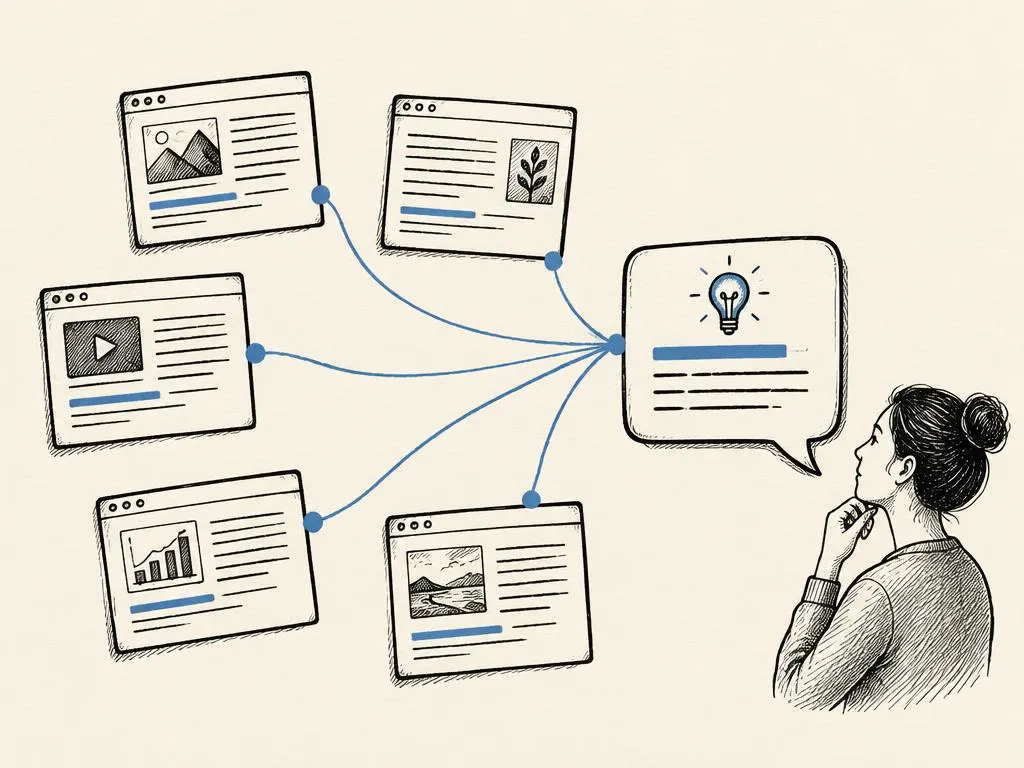
Reviewing what already ranks or performs well for a topic is a legitimate research step, but there is an important line: observe which subtopics, questions, and formats appear across the top results to find gaps (what's missing, outdated, or shallow), rather than copying their outline or rewording their sentences. The brief should explicitly instruct the writer to use competitor review only to identify gaps, and to bring original examples, structure, and voice.
Headings, examples, and visuals
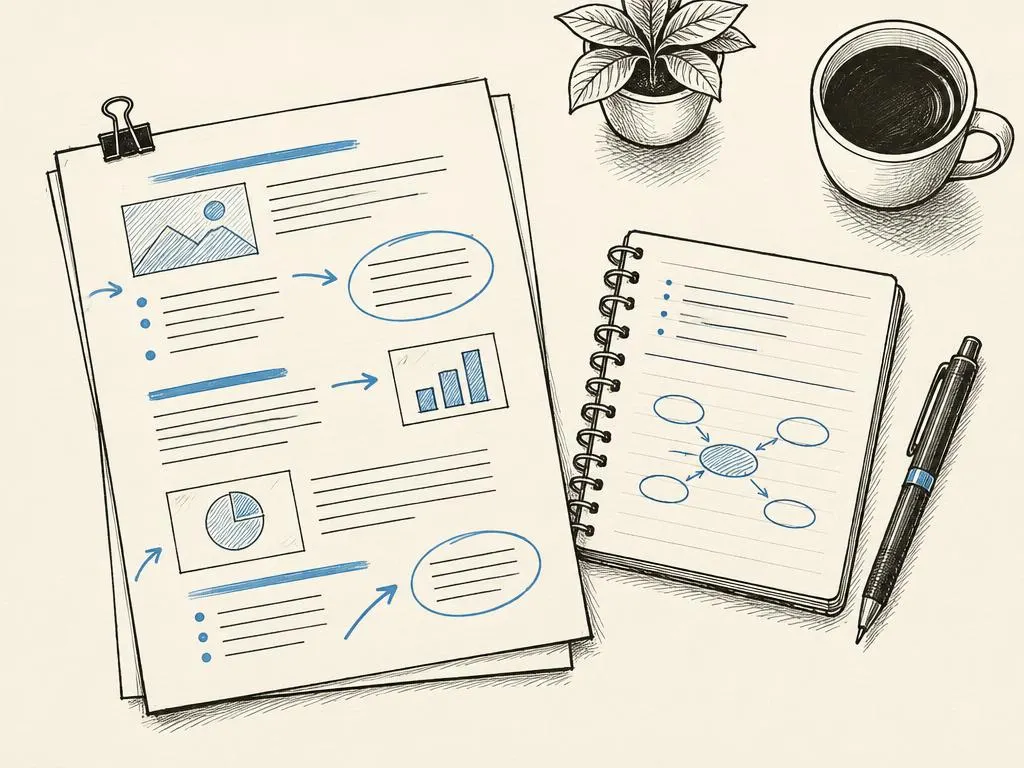
Draft a heading outline that mirrors the reader's natural question order, not an alphabetized list of subtopics. For each major section, note what kind of example or evidence belongs there: a worked calculation, a short hypothetical scenario, a checklist, or a cited statistic with its source. Note where a diagram, table, or illustration would clarify a process better than another paragraph would.
Internal links and unique value
List two to four existing pages the new article should link to, and from where those pages might link back, so new content integrates into your existing site structure rather than becoming an orphaned page. Finally, state the piece's unique value in one or two sentences: a specific framework, a worked example with real-style numbers (clearly labeled hypothetical where needed), or a template nobody else is providing cleanly.
A reusable content brief template
- Reader: who specifically is this for, and what do they already know?
- Task: what decision or action does this article need to help them make?
- Search intent: informational, commercial, transactional, or navigational?
- Scope: what is explicitly included and excluded?
- Evidence: what examples, worked numbers, or sources are needed, and where will they come from?
- Heading outline: in the order a reader would actually need them
- Internal links: two to four related pages to link to and from
- Unique value: the one or two sentences describing what this piece offers that others don't
- Pre-publish checks: accuracy, originality, broken links, and formatting
Checks before publication
Before publishing, verify factual claims against primary or official sources rather than another blog's summary, confirm the piece doesn't lift structure or phrasing from a specific competitor, check that internal links resolve and make sense in context, and read the piece once purely as the target reader would, asking whether their stated task is actually resolved by the end.
Common mistakes
- Briefing a keyword instead of a reader and a task, which produces generic, interchangeable content.
- Copying a competitor's heading structure directly instead of using their content only to spot gaps.
- Leaving search intent unstated, so the writer guesses whether the piece should explain, compare, or convert.
- Skipping the unique-value line, resulting in a piece that reads like ten others already online.
- Forgetting internal links until after publication, leaving new pages isolated from the rest of the site.
When this is not the right tactic
Highly time-sensitive content, such as a same-day reaction to breaking industry news, often doesn't need a full brief; a short outline and fast judgment serve better than a formal process. Similarly, a single experienced writer producing a small, consistent body of work for a well-understood audience may internalize this structure without writing it out each time. The brief is most valuable when multiple writers, or a long gap between planning and drafting, make shared context necessary.
Where to go next
Once you can brief an article well, the next useful skill is understanding how AI-assisted search and answer engines evaluate the same qualities, evidence, clarity, and originality, when deciding what to cite or summarize.