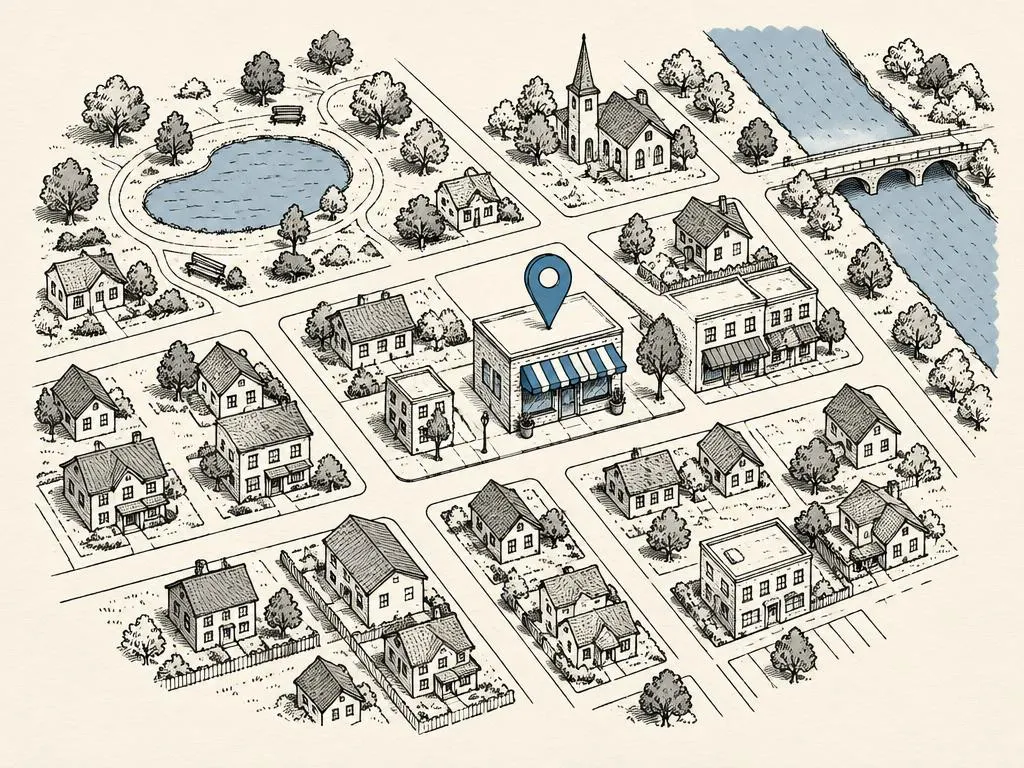
If you run a plumbing company, a dental clinic, a cleaning service, or any business that serves customers in a defined geographic area, local SEO is the set of practices that help nearby customers find you in Google Search and Google Maps when they search for what you do. Done honestly, it is one of the highest-leverage, lowest-cost marketing activities available to a local service business. Done dishonestly, with fake addresses or spun duplicate pages, it tends to get listings suspended and wastes months of effort.
The three pillars of local SEO
Local search visibility rests on three things working together: accurate, consistent business information across the web; a complete and well-maintained Google Business Profile (the free listing that controls how your business appears in Maps and local search results); and genuine signals of trust, meaning real reviews and real, useful content about what you do and where.
- 1Confirm and standardize your business name, address, phone number (NAP), and service area
- 2Claim and fully complete your Google Business Profile with accurate categories, hours, and photos
- 3Build or update service and location pages with real, specific detail about what you offer where
- 4Ask satisfied customers for honest reviews, consistently and at the right moment
- 5Monitor your listing and pages for accuracy as your business changes
Getting your identity and contact information right
Search engines use consistency as a trust signal. If your business is listed as 'Riverside Plumbing LLC' on your website, 'Riverside Plumbing' on your Google Business Profile, and 'Riverside Plumbing Services' on a directory, that inconsistency can confuse both searchers and ranking systems. Pick one accurate, legal version of your name, address, and phone number, and use it everywhere: your website footer, your Google Business Profile, directories, and any citation (a web mention of your business details) you control.
For businesses that serve customers at their own location (an office, clinic, or storefront), the address must be a real, staffed location where customers could visit during stated hours, in line with Google's business profile guidelines. For service-area businesses that travel to customers (plumbers, mobile groomers, home cleaners), you generally do not display a public address at all and instead define your service area honestly, listing the actual cities or regions you serve rather than every town in the country.
Google Business Profile basics
Google Business Profile is the free tool for managing how your business appears in Google Search and Maps. At minimum, a complete profile includes an accurate business name, the correct primary and secondary categories, real business hours, your website link, a clear service area or address, and photos of your actual location, team, or completed work. Keep this information current: outdated hours or a disconnected phone number damage trust with both customers and the platform.
Building real local proof
Local proof means evidence that you genuinely serve the areas and services you claim. This can include: a page describing a specific service in detail (not a thin paragraph repeated across ten city names), photos of completed jobs with context, named service-area pages that mention real landmarks or neighborhoods you actually work in, and case-study style write-ups of real (not fabricated) projects, written in general terms if client confidentiality matters.
Why real reviews matter
Reviews are one of the clearest trust signals available to a local business, both to customers and to search systems. Ask happy customers to leave a review shortly after a positive interaction, make it easy with a direct link, and respond to reviews, positive and negative, professionally. Never buy reviews, incentivize them in exchange for a positive rating, or post fake ones; this violates platform policies and can result in removed reviews or a suspended listing, in addition to being misleading to customers.
A local-presence audit template
- Business name, address, and phone number match exactly across website, Google Business Profile, and directories
- Google Business Profile has correct categories, current hours, service area, and real photos
- Service-area pages name real places and describe actual work, not duplicated filler text
- At least one process exists for asking customers for honest reviews
- No invented addresses, virtual offices presented as staffed locations, or mass-produced near-duplicate city pages
- Someone checks the profile and pages quarterly for accuracy as hours or services change
Why invented addresses and mass city pages backfire
A common shortcut is to list an address you don't actually staff, or to publish dozens of near-identical pages, each with a city name swapped in, hoping to rank for every nearby town. Both tactics violate the spirit (and often the explicit rules) of local search guidelines, because they misrepresent where a business actually operates or add duplicate, low-value content. The realistic risk is a suspended Business Profile, pages that search engines treat as low-quality duplicate content, and customers who show up expecting a location that doesn't genuinely serve them. The sustainable alternative is slower but durable: fewer pages, each describing a place you actually serve, with real detail.
Common mistakes
- Letting business name, address, or phone number drift out of sync across the web over time.
- Treating the Google Business Profile as a one-time setup instead of something to maintain.
- Buying or incentivizing reviews, which risks removal and damages genuine trust.
- Publishing thin, duplicated service-area pages for towns the business doesn't truly serve.
- Using a non-staffed address (like a mailbox) for a business type that requires a real physical location.
When this is not the right tactic
Local SEO is the wrong starting point for a business with no fixed service area, such as a fully remote consultancy serving clients nationwide or internationally; in that case, general SEO and content strategy matter more than local signals. It's also not a quick fix: a brand-new business with zero reviews and an incomplete profile should expect weeks to months of steady, honest work before meaningful visibility builds, and no legitimate tactic can guarantee a specific ranking position.
Where to go next
Once your local presence is accurate and complete, pair it with the broader SEO fundamentals and an understanding of how AI-powered search tools surface local businesses, since many of the same honesty and consistency principles apply there too.