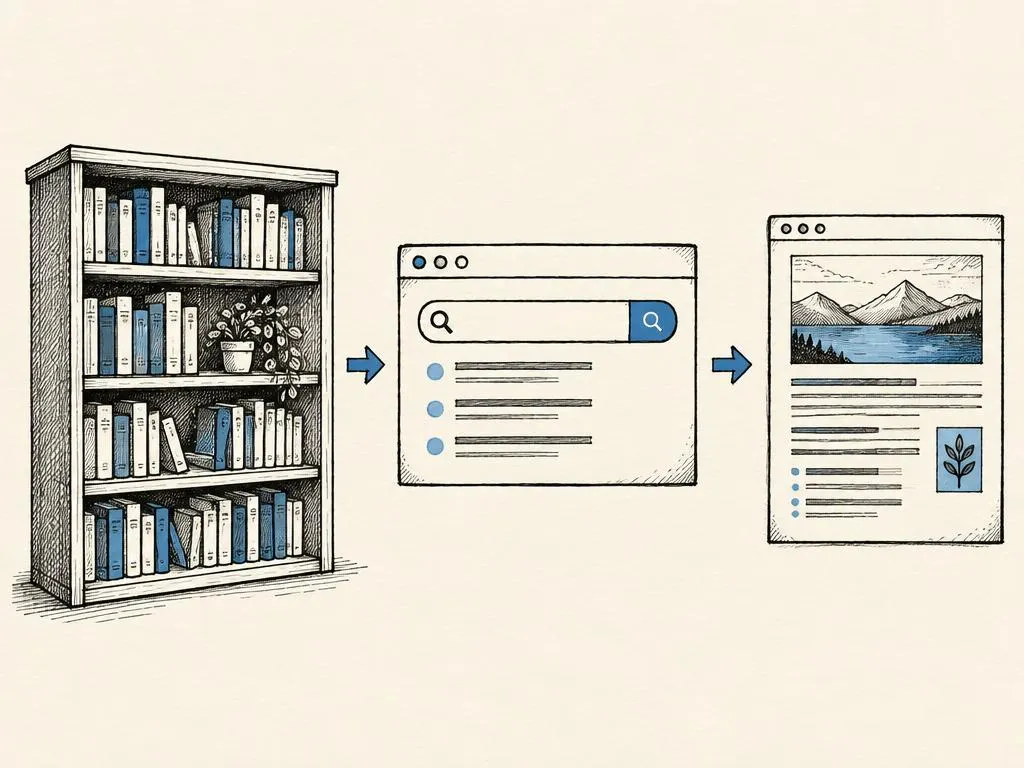
SEO (search engine optimization) is the practice of helping search engines find, understand, and want to show your page to people searching for related things. It is not a trick or a single setting you switch on. It is a combination of three layers working together: can the page be accessed and read at all, does it match what the searcher actually wants, and is it genuinely useful enough to deserve a place among the results. This guide walks through each layer and ends with a seven-day plan you can run on a real page today.
Layer one: crawling and indexing
Before a page can rank for anything, a search engine has to discover it (crawling) and store a processed copy of it in its database (indexing). Crawling happens when automated programs, often called crawlers or bots, follow links from page to page across the web, visiting your site the way a reader would but at a much larger scale. If your page has no links pointing to it and was never submitted anywhere, a crawler may simply never find it. Indexing happens after crawling: the search engine decides whether the page's content is worth storing and retrieving later for relevant queries. A page can be crawled but still not indexed, for example if it is marked 'noindex,' is a near-duplicate of another page, or is judged too thin to be useful.
This distinction matters because many beginners jump straight to writing advice (keywords, headings, word counts) while skipping the technical question of whether the page is even reachable. If you are using a mainstream website platform or content management system, basic crawlability is usually fine by default, but it is still worth confirming your page is not accidentally blocked or excluded before investing time in content.
- 1Crawling: a search engine's bot finds and fetches the page via a link or a submitted sitemap
- 2Indexing: the search engine processes and stores the page's content for retrieval
- 3Relevance matching: the search engine considers the page for queries related to its topic
- 4Ranking: the search engine orders eligible pages by relevance, usefulness, and other signals
Layer two: matching search intent
Search intent is what the person typing a query actually wants to accomplish. The same general topic can have very different intents. Someone searching 'what is SEO' wants an explanation (informational intent). Someone searching 'best SEO tools for small business' wants to compare options (comparison intent). Someone searching 'hire SEO freelancer' wants to take action (transactional or hiring intent). A page written for the wrong intent can be well-written and still fail to rank well, because it does not match what searchers wanted when they typed that query.
Before writing, it helps to look at the pages currently showing for a target query and ask what format and depth they share: are they mostly how-to guides, comparison tables, product pages, or forum discussions? That pattern is a strong clue about the intent the search engine has learned to associate with that query.
Layer three: relevance and genuine usefulness
Once a page is crawlable, indexed, and matched to the right intent, the remaining question is whether it is actually good: does it answer the question clearly, cover the topic with appropriate depth, and avoid wasting the reader's time with filler before the useful part. Search engines increasingly evaluate content for whether it demonstrates real experience, expertise, and a clear point of view, rather than rewarding pages that simply repeat a keyword many times. Keyword stuffing, repeating a phrase unnaturally throughout a page, is an outdated tactic that can actively hurt a page's standing rather than help it.
What SEO can and cannot promise
SEO is a long-term, probabilistic practice, not a guaranteed outcome. No ethical practitioner can promise a specific ranking position or a fixed timeframe, because rankings depend on competition, the search engine's evolving systems, and factors outside any one site's control. What a disciplined SEO practice can realistically deliver is a page that is technically accessible, well-matched to intent, and genuinely useful, which improves the odds of being found and chosen over time. Treat any guarantee of 'page one in 30 days' as a red flag rather than a credible claim.
A worked example: optimizing one real page
Your seven-day SEO practice plan
Days 1–2: pick one page and one primary query
Choose a real or hypothetical page and one specific query it should answer. Search that query yourself and study the top results: what format are they, what questions do they answer, and roughly how deep do they go.
Days 3–4: check technical access and structure
Confirm the page is not blocked from indexing, has one clear H1 that matches the topic, and uses H2/H3 headings to organize sections logically rather than as a single wall of text.
Days 5–6: write or revise for intent and usefulness
Rewrite the opening to directly answer the main question within the first few sentences, then expand with specifics, examples, and practical detail the competing pages are missing.
Day 7: review and record a baseline
Note the page's current state (is it indexed, what does it currently rank for, if anything) so you have a honest baseline to compare against in a month, rather than guessing whether changes worked.
- The page is not accidentally blocked from indexing
- One clear, descriptive H1 matches the page's main topic
- Headings (H2/H3) organize the page into logical sections
- The opening paragraph directly answers the primary question
- The content matches the dominant search intent for the target query
- No unnatural keyword repetition; language reads naturally
- A baseline note is recorded so future progress can be measured honestly
Common mistakes beginners make
- Focusing on keyword repetition instead of answering the underlying question clearly.
- Skipping the check on whether a page is even crawlable or indexed before worrying about content.
- Writing for the wrong intent, for example a long opinion essay for a query that wants a quick comparison table.
- Expecting a guaranteed ranking position or timeframe from any single optimization.
- Publishing and never revisiting the page to measure whether changes actually helped.
When SEO is not the right tactic
SEO is a slower, compounding channel; it is not the right first move if you need visibility or sales within days, in which case paid channels such as search or social ads are more appropriate for immediate reach. SEO also makes less sense for topics with essentially no search demand, where no one is actually typing related queries, or for purely internal tools and pages that are not meant to be publicly discoverable. In those cases, invest the time elsewhere and return to SEO once you have a topic with real, observable search demand.
Where to go next
Once you understand these three layers, the natural next steps are learning how to research keywords and intent in more depth, how to structure a library of pages that link to each other usefully, and the on-page and technical checklists that turn this foundation into a repeatable habit.