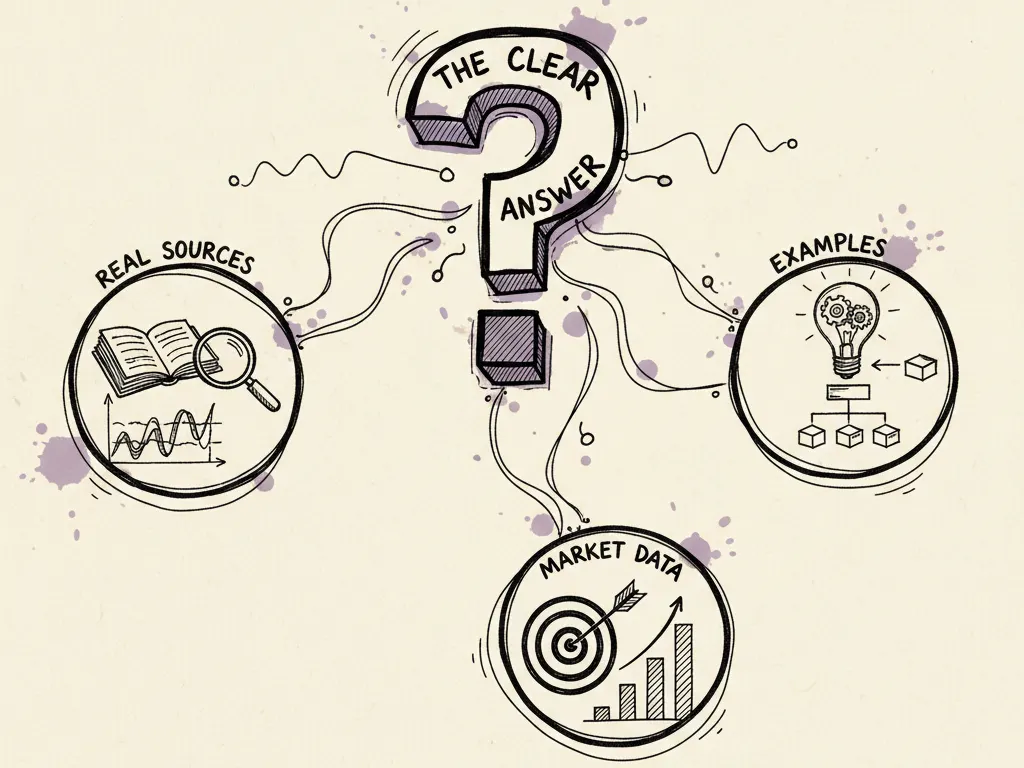
As AI answer engines become a meaningful discovery path alongside traditional search, teams want to know whether their brand is being mentioned or cited in AI-generated answers. The honest answer is that no platform currently offers a single, authoritative, cross-engine 'AI visibility score,' so tracking this requires building your own lightweight research method. This article gives you that method: a stable question set, a structured log, and clear rules for interpreting results responsibly.
Why this requires a research method, not a single check
Asking an AI system one question once and noting whether your brand appeared tells you almost nothing reliable, answers can vary by phrasing, time of day, user location, and system updates. A research method means repeating the same defined questions on a schedule, recording results consistently, and looking at patterns over multiple observations rather than treating any single run as conclusive.
Step one: build a stable question set
Choose 10 to 20 questions that real customers plausibly ask, phrased naturally, not keyword-stuffed. Keep the wording identical across each repeated run so differences in results reflect the AI system's behavior over time, not your own phrasing changes.
- Include direct questions about your category (e.g., 'best accounting software for freelancers in the UK').
- Include comparison questions naming your brand alongside competitors.
- Include a few questions a customer might ask after finding your brand (follow-up or deeper questions).
- Keep the set stable for at least a full tracking period before adding or removing questions, so trends stay comparable.
Step two: log every observation consistently
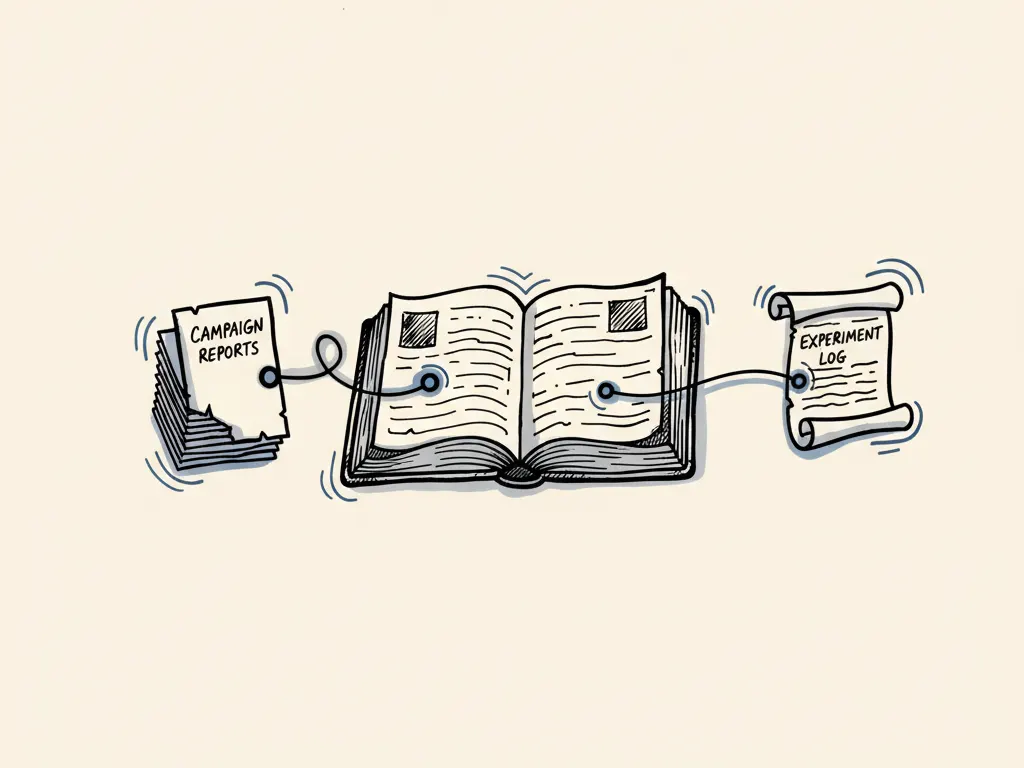
For each question and each run, record the same fields every time. This consistency is what turns scattered screenshots into usable data.
- 1Engine and version/mode used (e.g., a named AI system's web-browsing mode)
- 2Date and approximate time of the query
- 3Geography or account region, if the system allows setting one
- 4Exact question text used
- 5Full answer text or a faithful summary, saved verbatim where possible
- 6Whether your brand was mentioned by name, and in what context
- 7Whether a link or citation to your site specifically appeared
A simple reporting template
| Date | Engine | Question | Brand mentioned? | Linked/cited? | Context notes |
|---|---|---|---|---|---|
| 2026-10-06 | Example AI system A | Best accounting software for freelancers UK | Yes | No link shown | Mentioned third in a list of four tools |
| 2026-10-06 | Example AI system B | Best accounting software for freelancers UK | No | No | Two competitor names only |
| 2026-10-13 | Example AI system A | Best accounting software for freelancers UK | Yes | Yes, direct link | Named first with a short description |
Step three: distinguish citations from traffic
A mention or citation inside an AI answer is not the same as a website visit. Some AI systems show source links a user may or may not click; others summarize without any visible link at all. To know whether citations are actually driving traffic, cross-reference your citation log dates against your own analytics for referral traffic from AI platforms, where that referral source is identifiable, rather than assuming a mention equals a visit.
Step four: use official reporting tools where available
Where a platform provides its own reporting (for example, search console style tools or platform-specific analytics), use that data as your primary source rather than only manual query logging, since manual spot-checks are inherently a small sample. Manual logging remains useful for qualitative context, how your brand is described, what competitors appear alongside you, that structured reporting tools won't show.
Step five: explain variability and small-sample limits honestly
If you observe your brand mentioned in 6 of 15 questions in one week and 9 of 15 the next, that swing could reflect genuine improvement, random variation in how the AI system responded, or a change in the system itself. With small sample sizes and known answer variability, avoid declaring a change caused the shift unless you've held other factors steady and repeated the observation across multiple runs.
Illustrative values for one hypothetical tracking exercise; not a benchmark or guaranteed trend for any real brand.
Your observation log and reporting template
- Define 10-20 stable, naturally phrased questions and freeze the wording
- Choose the AI systems relevant to your audience and note exact version/mode used
- Build a log with engine, date, geography, question, mention, citation, and context fields
- Cross-check citation dates against analytics for any identifiable AI referral traffic
- Run observations on a fixed schedule (e.g., weekly or biweekly) for at least one full quarter
- Report trends with explicit caveats about variability and sample size
Common mistakes
- Treating a single query's result as proof your brand is or isn't visible in AI search.
- Confusing a brand mention in an AI answer with an actual website visit.
- Buying into a third-party tool's single 'AI visibility score' as an industry-standard metric.
- Changing question wording between tracking periods, which breaks comparability of results.
- Attributing any week-to-week change entirely to your own content work without considering platform-side updates.
When this is not the right tactic
If your business has very low query volume in your category, or if AI answer engines are not a meaningful discovery channel for your specific audience yet, this level of manual tracking may not be worth the ongoing time investment; a lighter, occasional spot-check may suffice. This method is also not a substitute for strong analytics fundamentals; get your core conversion tracking solid first before investing heavily in this more exploratory research layer.
Next steps
Draft your 10-20 question set this week, set up the logging template, and commit to one full quarter of consistent observation before drawing conclusions about any trend.