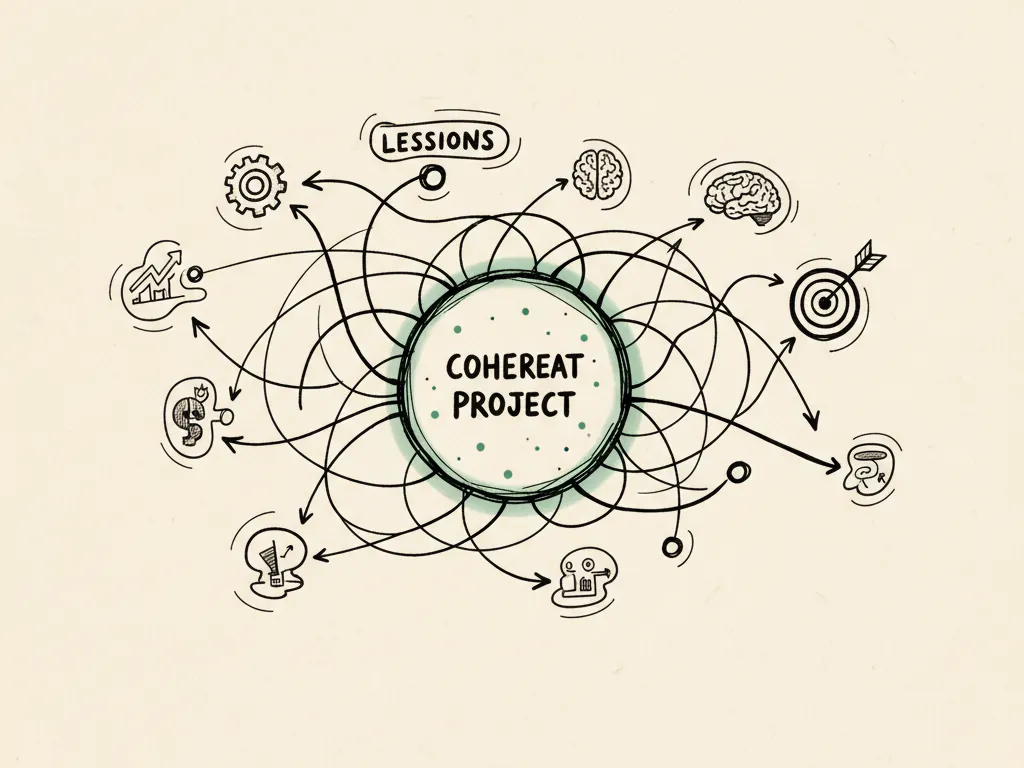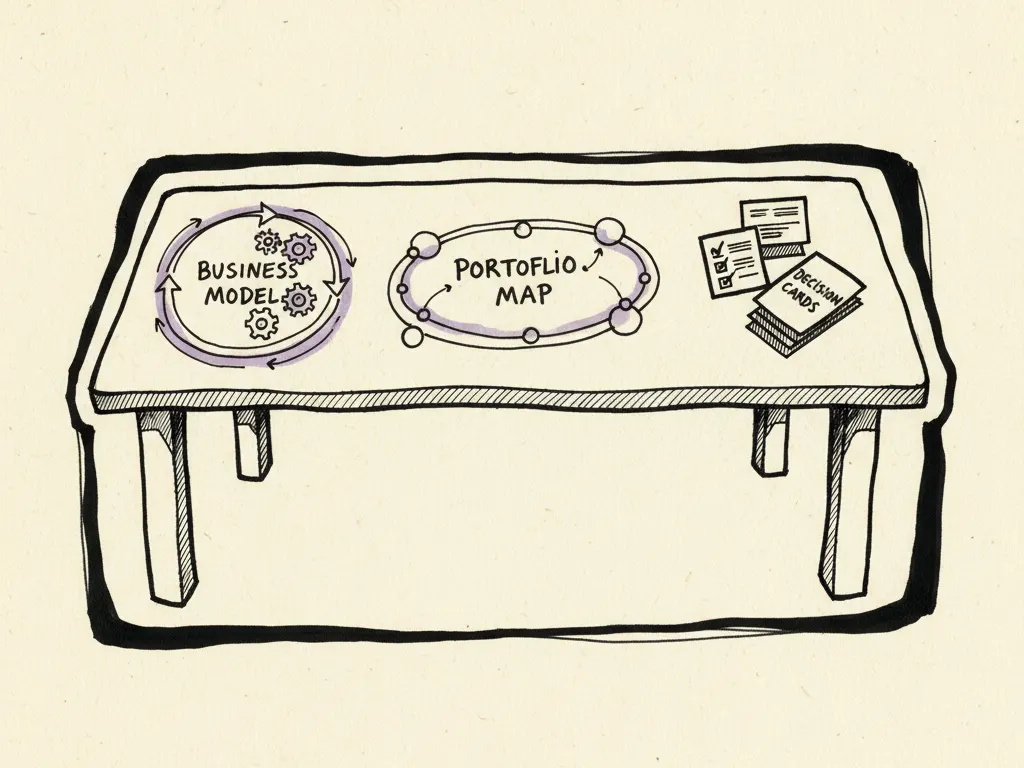
Most documents called a 'digital marketing strategy' are really a list of channels and a content calendar. That is not a strategy; it is a tactical plan with no stated reason for existing. A strategy that actually generates business results starts somewhere else entirely: with a diagnosis of what is limiting the business right now, followed by decisions about audience, offer, economics, and channels that are explicitly built to relieve that constraint.
This article assumes you already understand what digital marketing is (see the foundational article in this series) and have a basic acquisition channel inventory. The focus here is applied, pro-level strategy work: how an in-house marketer, founder, or agency team builds a strategy document that a CEO or board can act on, not a slide deck of generic best practices.
Step 1: Diagnose the actual constraint
Before choosing any channel, identify the single biggest constraint on growth. Common constraints include: not enough people know the business exists (awareness), enough people know but too few enquire (conversion of attention to leads), enough leads but too few close (sales conversion), or customers buy once and do not return (retention). Each constraint points to a different strategic emphasis. A business with strong lead flow but poor close rates does not need more top-of-funnel content; it needs better qualification, faster response times, or clearer offers at the point of decision.
Diagnosing the constraint requires looking at existing data (website analytics, CRM stage conversion rates, sales call notes) rather than assuming. If the business has no data yet, the first 30 days of the strategy should include instrumenting basic tracking before heavier spend.
Step 2: Define audience and offer with precision
A strategy aimed at 'small business owners' or 'everyone who needs our service' cannot inform channel or creative decisions. Define the audience by who they are, what triggers their need, where they currently look for solutions, and what they are skeptical about. Pair this with a specific offer: not just the service itself, but the entry point (a paid audit, a free consultation, a low-cost starter package) that matches how ready this audience typically is to buy.
Step 3: Model demand and unit economics before choosing channels
Before you pick channels, estimate two things: how many potential buyers exist and are reachable in a given period, and what you can afford to pay to acquire one, based on margin and payback tolerance. This keeps the plan honest. A channel can be theoretically effective and still be the wrong choice if the business cannot tolerate the cash-flow timing or the required spend.
Step 4: Select channels that match buying behavior, not trends
Channel choice should follow from the diagnosis, audience, and economics, not from what is currently popular. A long sales-cycle B2B offer with a high CAC ceiling can sustain outbound-supported content and LinkedIn; a low-margin, high-frequency ecommerce product usually cannot sustain the same approach and needs cheaper, higher-volume channels like search or paid social with tight creative testing. Resist running every channel at once; a focused portfolio of two or three channels, run well, outperforms a thin presence across six.
- 1Diagnose the binding constraint using existing data
- 2Define audience and offer precisely enough to brief creative
- 3Model demand size and unit economics (CAC ceiling, payback)
- 4Select a focused channel portfolio matched to buying behavior
- 5Design a 90-day experiment portfolio with decision gates
- 6Build reporting that triggers scale, iterate, or stop decisions
Step 5: Build a 90-day experiment portfolio
A strategy document is not a guarantee; it is a set of hypotheses worth testing. Structure the first 90 days as a portfolio: one or two 'core' bets with enough budget and time to reach a meaningful read, and one or two smaller 'exploratory' bets that could become core channels if they perform. Assign a decision gate to each: a specific metric threshold and date at which you will decide to scale, adjust, or stop.
Decision gates, not open-ended testing
Without a pre-agreed gate, teams tend to keep underperforming channels running out of sunk-cost thinking, or kill promising channels too early because a stakeholder lost patience. Writing the gate down before launch (for example, 'if cost per qualified lead exceeds $X after $Y spend and 30 days, pause and redesign the offer or targeting') removes emotion from the decision.
Step 6: Connect reporting to decisions
Reporting exists to answer one question at each review: what should we do next? A dashboard full of impressions, reach, and engagement rate without a connection to leads, pipeline, or revenue does not help a CEO decide anything. For each channel in the portfolio, report the metric that maps to its decision gate, alongside enough context (spend, volume, time in market) to judge whether the result is meaningful or just noise.
A full hypothetical example: a regional accounting firm
Template: the advanced strategy canvas
Use this canvas as the deliverable for this lesson. Fill in each section for a real or clearly hypothetical business:
- Constraint diagnosis: what specific stage is limiting growth, and what evidence supports it?
- Audience definition: who, what trigger, where they look, what objection they hold
- Offer and entry point: what the first purchase or step actually is
- Demand size estimate: roughly how many reachable buyers exist in the period
- Unit economics: margin, CAC ceiling, acceptable payback period
- Channel portfolio: 2-3 channels matched to buying behavior, with rationale
- 90-day experiment plan: budget, timeline, and owner per experiment
- Decision gates: the metric, threshold, and date for each experiment
- Reporting cadence: what gets reviewed, how often, and by whom
Common mistakes
- Starting with a channel (e.g., 'we should do TikTok') instead of a diagnosed constraint.
- Writing an audience definition too broad to inform any creative or targeting decision.
- Setting budgets based on a generic percentage-of-revenue rule rather than CAC ceiling and payback tolerance.
- Running many channels thinly instead of a focused portfolio run well.
- Reviewing vanity metrics (reach, impressions) without tying them to a decision gate.
- Treating the 90-day plan as a fixed roadmap rather than a set of testable hypotheses.
When this is not the right tactic
A full strategy canvas is overkill for a business testing its very first marketing activity with no existing data and a tiny budget; in that case, a simpler plan (pick one channel, run one small test, learn) is more appropriate, and this framework becomes useful once there is enough history to diagnose a real constraint. It is also not the right approach when a business faces a non-marketing problem, such as a broken product, poor service delivery, or unsustainable pricing; no channel strategy fixes a retention problem caused by the product itself.
Your next step
Fill out the advanced strategy canvas above for one real or hypothetical business. Make the constraint diagnosis the first thing you write, and do not let yourself write a channel name until the audience, offer, and economics sections are complete.