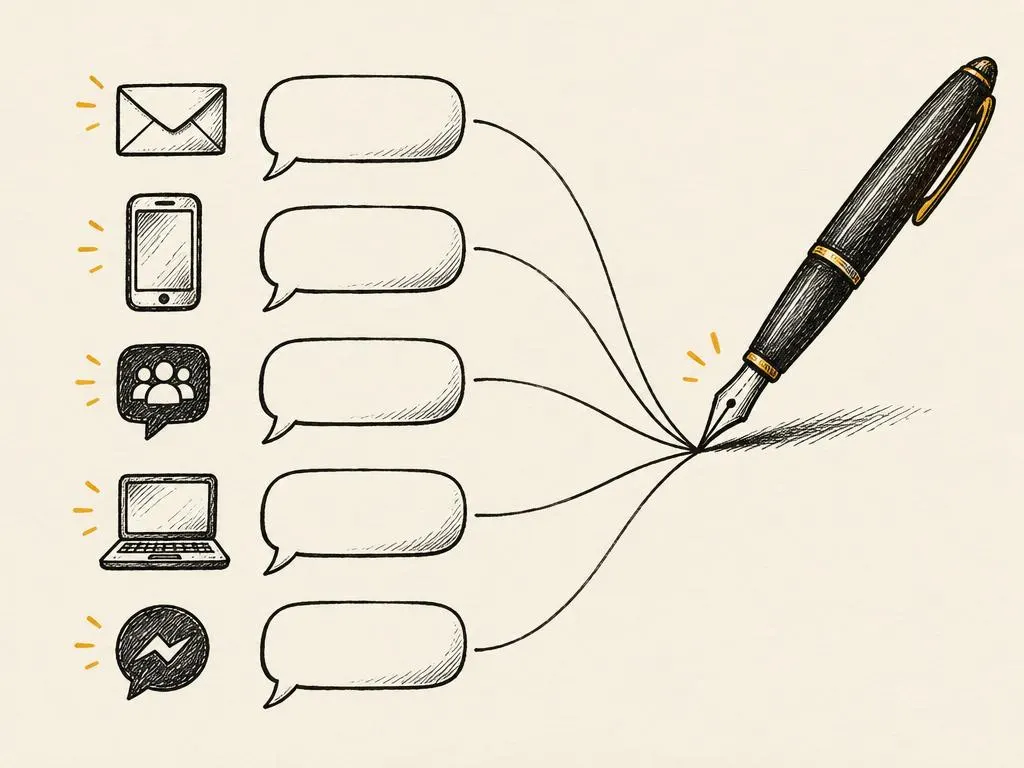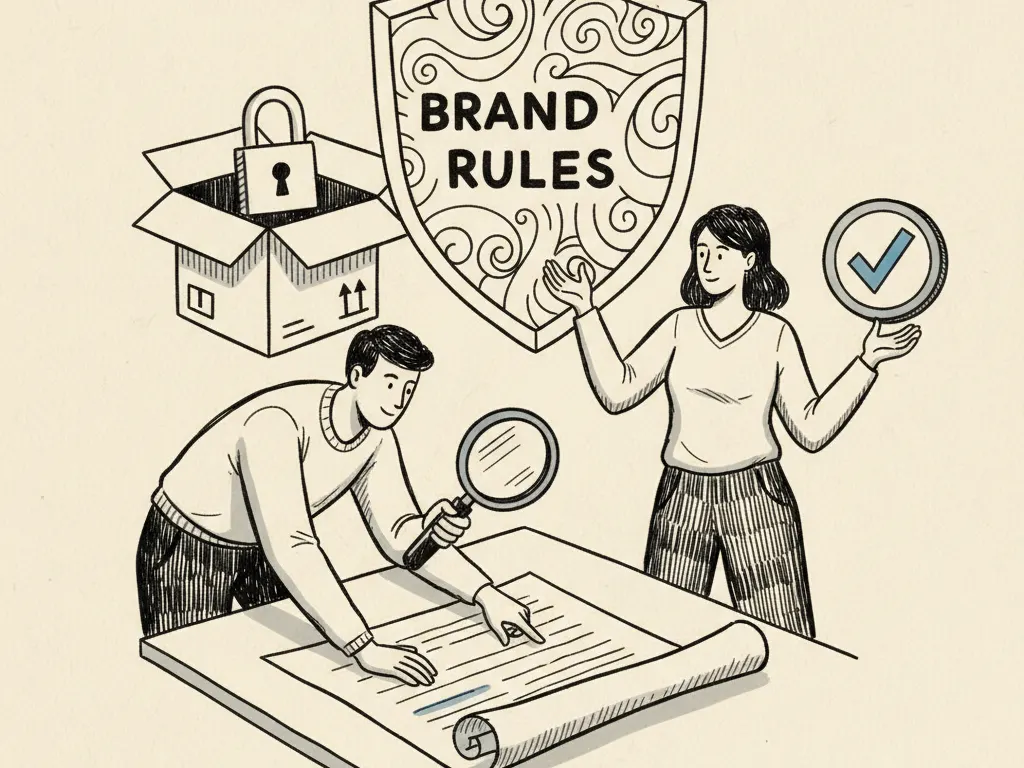
AI assistants can genuinely speed up content production, but the most common failure mode is publishing generic, unverified output straight from a vague prompt. This article lays out a workflow that keeps the speed benefit while avoiding that trap: a real brief, separated ideation and verification steps, and a human editor who remains accountable for every claim.
Why vague prompts produce generic copy
A one-line prompt like 'write a social post about email marketing' gives the model almost nothing to work with beyond generic patterns it has seen many times before, so it returns generic output. The fix isn't a cleverer single prompt; it's giving the model the same inputs a competent human writer would need: who this is for, what we actually know, and how we sound.
Building a real brief
A usable brief for an AI assistant includes: the specific audience and their situation, the actual insight or evidence you want to communicate (not a vague topic), your defined brand voice, the format and length required, and any constraints (claims to avoid, required disclaimers, a specific CTA).
- Specific audience and their current situation or question
- The real insight, data point, or evidence to communicate, stated plainly
- Your brand voice guide or a short description of tone and vocabulary
- Format, length, and platform constraints
- Any claims, numbers, or comparisons that must not be invented
- The intended call to action, if any
Separating ideation from fact-checking
Use AI assistants freely for ideation, generating hook variations, structural outlines, alternative phrasings, since the cost of a mediocre idea is low and you'll select from several options. Treat any factual claim, statistic, platform feature, or quoted source the model produces as unverified until you check it against a real, current source. Language models can state incorrect information confidently, so verification is a separate, mandatory step, not an optional one.
Editing for specificity
AI output tends toward safe, general phrasing. Editing for specificity means replacing vague claims with concrete details: real numbers where you have them, actual customer language pulled from real conversations, and specific examples rather than generic placeholders. This single editing pass is usually what separates a useful AI-assisted draft from forgettable AI-generated filler.
Checking claims and source links
Before publishing, confirm every factual claim against a real, checkable source, confirm every statistic has a traceable origin, and confirm any link the model suggested actually exists and goes where it claims to. Never publish an invented statistic, invented testimonial, or invented source just because an AI assistant generated it confidently.
Retaining human editorial accountability
A named person or team should sign off on anything published, confirming the voice is correct, the claims are verified, and the content reflects actual knowledge of the business and audience. AI assistants are a drafting and ideation tool; the accountability for what goes out under your brand's name sits with the human editor, not the tool.
A quality-review checklist before publishing AI-assisted content
- Every factual claim has been checked against a real, current source
- Every statistic or number has a traceable origin, not invented by the model
- The copy has been edited for specificity, with generic phrasing replaced
- The voice matches the brand's defined voice guide
- A named human has reviewed and approved the final version
- Any suggested links have been checked to confirm they exist and are accurate
Common mistakes
- Publishing an AI draft verbatim without any human editing pass.
- Treating AI-generated statistics or quotes as verified facts without checking them.
- Using a vague one-line prompt and expecting specific, on-brand output.
- Skipping the brief step and relying on back-and-forth prompting to slowly arrive at something usable.
- Letting AI-generated content drift away from the defined brand voice over repeated use.
When this is not the right tactic
For content making specific factual, medical, legal, or financial claims, AI-assisted drafting still requires rigorous human verification and, where relevant, qualified review, so the time saved on drafting should not be mistaken for reduced need for expert oversight. If a team has no process for checking AI output, it is safer to slow down and build that review step first rather than scaling AI-assisted output without it.
Where to go next
This workflow pairs directly with the brand voice guide from earlier in this module, and connects to the more advanced AI-assisted growth workflows covered later in the curriculum.