The risk with AI in marketing is rarely 'the tool is bad.' It is usually a missing process: no clear rule for which tasks AI can touch, no grounding in your actual brand facts, and no review step before something goes live. This article gives a practical implementation framework a small team can run without specialized data science resources, built around prioritization, grounding, review boundaries, benchmarking, and measurement.
Start by prioritizing use cases, not tools
Teams often start by picking a tool and looking for things to do with it. A more reliable approach is to list your actual marketing tasks, then rate each one by how reversible a mistake would be and how much judgment the task requires. Tasks with low risk and high reversibility (a first draft of a blog outline, a batch of subject line options to choose from) are good early candidates. Tasks with high risk or low reversibility (a public claim about pricing, a legal or compliance statement, a sensitive customer communication) should stay closer to fully human-led, with AI used only for research or drafting that a person substantially reworks.
| Task type | Example | Suitable AI role |
|---|---|---|
| Low risk, reversible | Blog outline drafts, subject line variants | AI drafts, human picks and edits |
| Medium risk | Social captions, ad copy variants | AI drafts from approved facts, human reviews before publishing |
| High risk, hard to reverse | Pricing claims, guarantees, legal/compliance text | AI may research, human writes and approves final wording |
| Sensitive judgment calls | Responding to a public complaint, brand tone in a crisis | Human-led; AI not used for the final response |
Ground the model in approved information
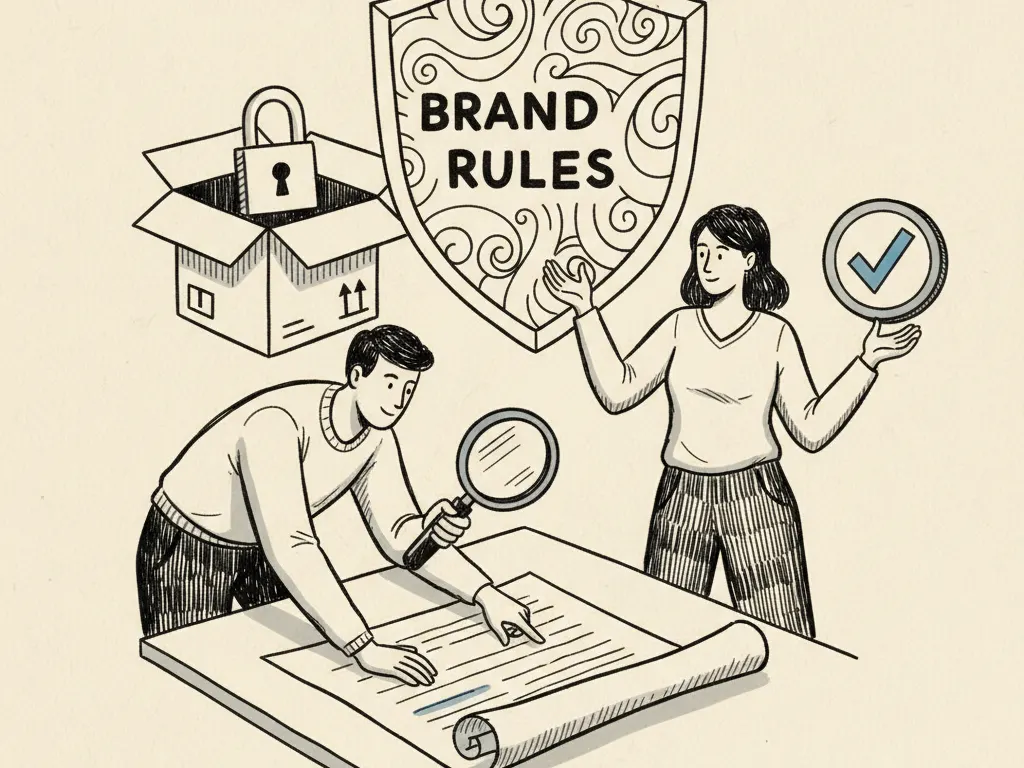
A general-purpose AI model does not know your specific pricing, guarantees, product limitations, or brand voice unless you provide them. Before using AI for any customer-facing content, assemble a short reference document: your brand voice description with examples, current accurate product or service facts, pricing and policy details, and phrases or claims you never use. Paste or upload this into your workflow (as a system prompt, a reference document, or a custom instruction set depending on your tool) so the model's output is checked against your facts rather than invented ones.
- Keep the grounding document updated whenever pricing, policies, or offers change, since outdated grounding produces outdated or inaccurate claims just as readily as no grounding at all.
- Include a short list of real customer objections and how your business actually addresses them, so AI-assisted responses reflect real positioning rather than generic claims.
- Note explicitly which claims require evidence (certifications, specific results) and which the business is not currently able to substantiate.
Design review and permission boundaries
Define, in writing, three tiers: what AI output can be published without human review (rare, and usually limited to very low-risk internal use), what needs a single reviewer's sign-off, and what needs full team or compliance review. This boundary should be explicit enough that a new team member could follow it without guessing.
- 1AI drafts using the grounding document and a defined brief
- 2Draft is checked against brand voice guide and fact sheet by a human reviewer
- 3Any claim, number, or quote is verified against a real source before approval
- 4Approved content is published with a note of which tool and version assisted the draft
- 5Published content performance is logged for benchmarking
Benchmark against current work, and measure outcomes
Before scaling any AI-assisted workflow, compare a batch of AI-assisted output against your team's recent best human-only output on the same task, using the same quality criteria (accuracy, voice match, conversion where measurable). This benchmark tells you whether AI assistance is actually raising or lowering your bar, since speed gains are not worth much if quality or accuracy quietly drops.
- Track time saved per piece of content, measured honestly (including review and correction time, not just drafting time).
- Track error rate: factual mistakes, voice mismatches, or claims that needed correction before publishing.
- Track downstream performance (engagement, conversion) of AI-assisted content versus prior human-only baselines where you have enough volume to compare meaningfully.
- Revisit the benchmark periodically, since both your team's standards and the AI tool's capabilities change over time.
Maintain versioning
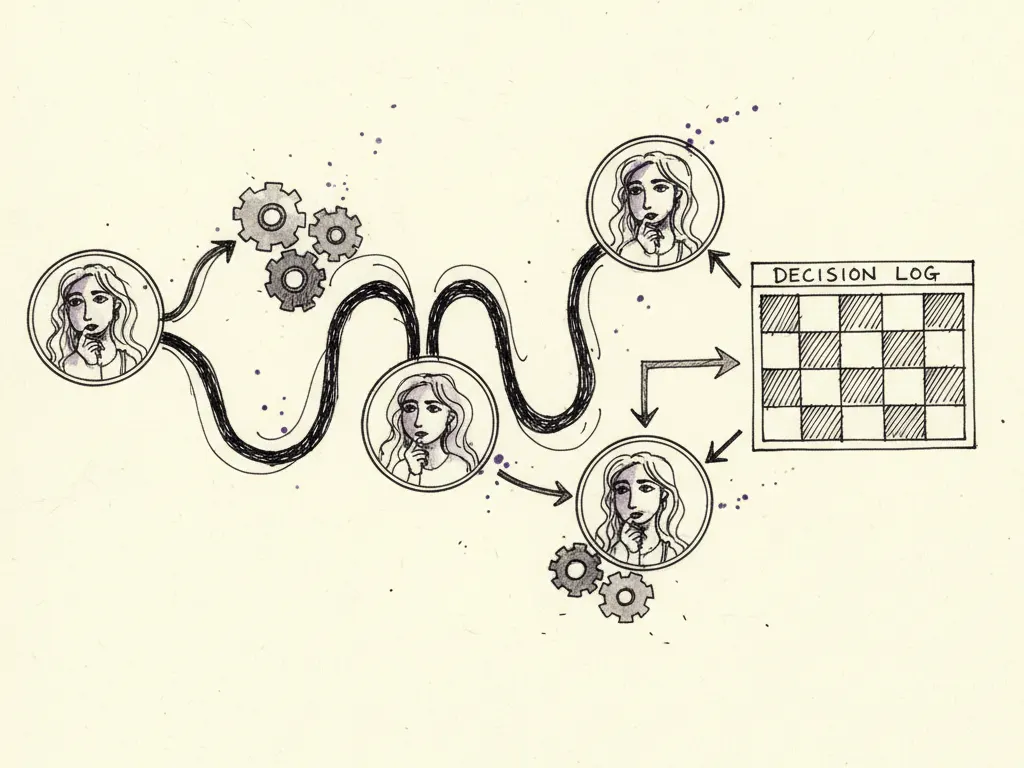
Keep a simple log of which tool, prompt approach, or workflow version produced each piece of AI-assisted content, along with the date. This matters for two reasons: if a quality problem appears later, you can trace it to a specific workflow step, and when tools update their capabilities, you can compare old and new workflow versions on the same tasks rather than assuming an update is automatically better.
Where automation is not suitable yet
Fully unsupervised AI publishing of customer-facing marketing claims, pricing commitments, legal or compliance statements, or sensitive customer communications is not a suitable use case for most small and mid-sized marketing teams today, regardless of how capable a given tool appears, because the cost of an uncaught error (a false claim, a wrong price, a tone-deaf response during a sensitive moment) is higher than the time saved. Treat AI as an assistant inside a reviewed workflow, not a replacement for the final approval step on anything customers will see as a commitment from the business.
Common mistakes
- Letting AI publish customer-facing content directly without a human review step, especially early in adoption.
- Skipping the grounding document and letting the model guess at pricing, policies, or brand voice.
- Measuring only time saved and not tracking error rate or quality against a real benchmark.
- Treating one workflow or tool as permanent instead of maintaining versioning and periodically re-benchmarking.
- Using AI for high-risk tasks (legal claims, compliance text) before establishing review discipline on lower-risk tasks first.
When this is not the right tactic
If your team has no existing documented brand voice, product facts, or review process, building an AI workflow first can bake inconsistency in rather than removing it; document those basics before layering AI assistance on top. It is also not the right investment if your content volume is very low (a handful of posts a month), since the process overhead of grounding documents and review tiers may cost more time than it saves at that scale; in that case, light, ad hoc AI-assisted drafting with careful manual review may be enough without a formal framework.